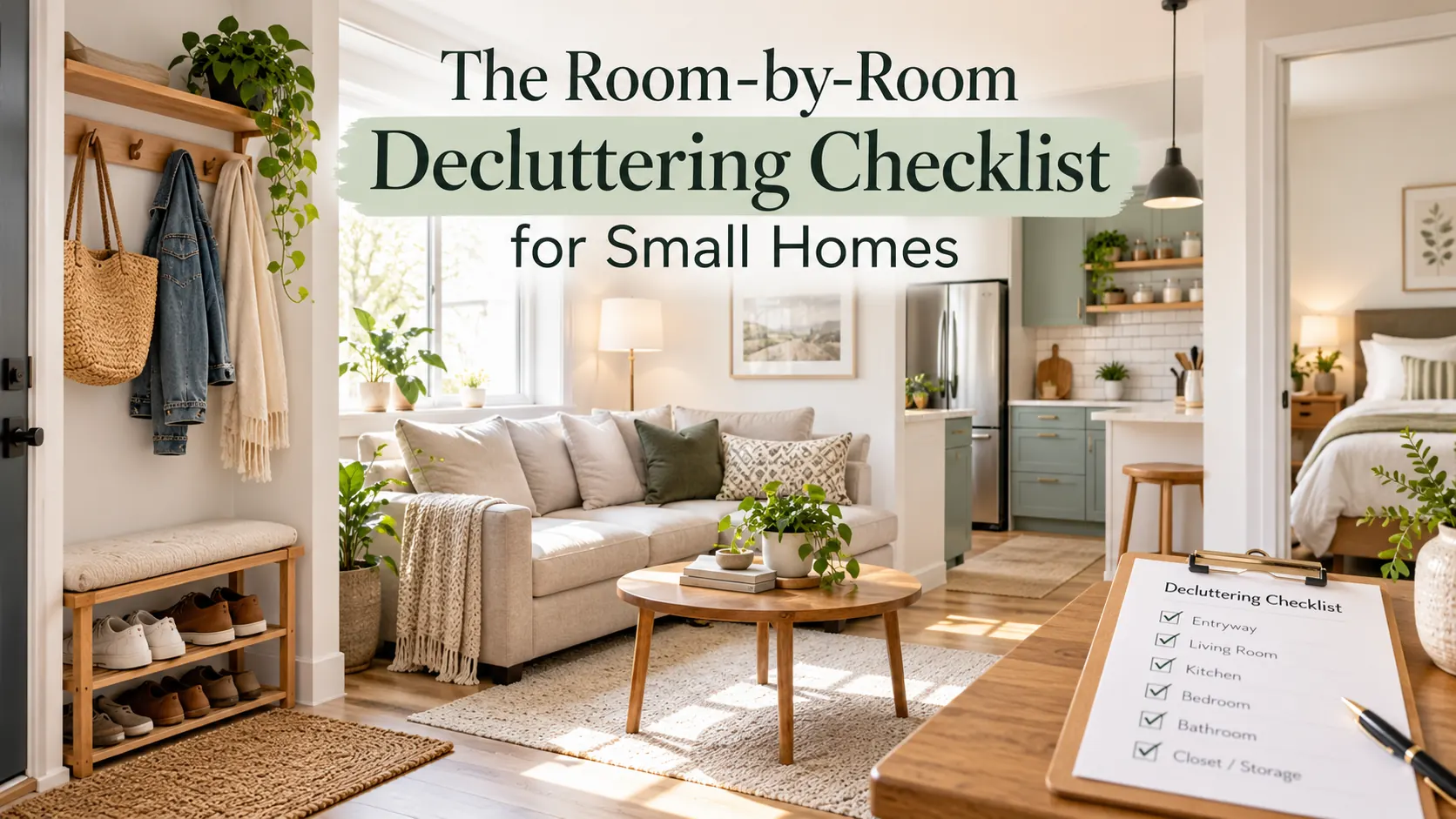
The Room-by-Room Decluttering Checklist for Small Homes
A small home doesn’t need much clutter to start feeling crowded. A few extra pairs of shoes can block the entryway, unused appliances can take over the kitchen counter, and one overflowing drawer can make everyday routines frustrating.
The solution isn’t necessarily more storage. Sometimes, it’s simply having fewer things competing for the space you already have.
This decluttering checklist room by room helps you figure out exactly what to remove, reconsider, or relocate in every part of your home. Whether you live in a studio apartment, a small house, or a compact family home, you can work through one room at a time without turning the entire place upside down.
You don’t need to finish everything today. Start with the room that’s bothering you most, check off what applies, and come back for the rest.
Before You Start: Make Decluttering Easier
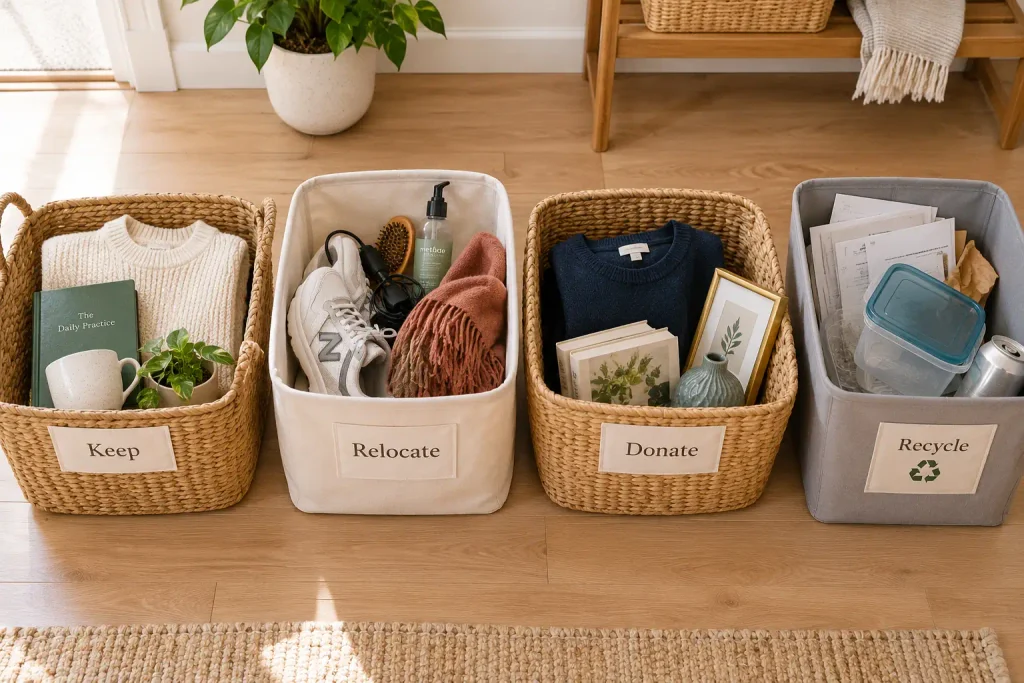
Before opening cabinets or pulling everything out of a closet, prepare four destinations:
- Keep: Things you use, need, or genuinely want in that space.
- Relocate: Items that belong somewhere else in your home.
- Donate or sell: Usable things you’re ready to let go.
- Trash or recycle: Broken, expired, or unusable items.
You can use shopping bags, laundry baskets, or boxes you already own.
Work on one small area at a time. Finish a drawer before opening another, and avoid making a large sorting pile on the floor.
This matters especially in small homes, where a half-finished decluttering project can quickly disrupt the entire room.
For every item you’re unsure about, ask yourself:
Do I use it? Would I choose to keep it today? Is it worth the space it takes up?
You don’t have to get rid of everything you rarely use. Seasonal equipment, meaningful keepsakes, and essential documents can still deserve a place in your home.
The goal is to make thoughtful decisions, not meet an arbitrary item count.
1. Entryway Decluttering Checklist
An entryway often has to manage shoes, coats, bags, keys, and incoming mail within just a few square feet.
Start with the things that accumulate near the door.
What to declutter
- Shoes that no longer fit or feel comfortable
- Damaged shoes you won’t repair
- Coats and jackets you no longer wear
- Excess reusable shopping bags
- Broken umbrellas
- Old receipts and junk mail
- Expired coupons
- Empty delivery packaging
- Keys you can no longer identify
- Bags and backpacks you rarely use
- Seasonal accessories that belong in longer-term storage
- Items that have been waiting to leave the house for weeks
✔️ Small-space check: Can you enter, remove your shoes, and hang up your coat without moving something first?
If not, prioritize clearing the walking path and keeping only everyday essentials within reach.
An entryway doesn’t need to hold every pair of shoes or jacket you own.
2. Living Room Decluttering Checklist
In small homes, the living room often doubles as a workspace, play area, dining space, or guest room.
That makes it one of the easiest places for belongings from other rooms to accumulate.
What to declutter
- Magazines and catalogs you won’t revisit
- Books you no longer want to keep
- DVDs and outdated media
- Old remotes and mystery cables
- Electronics that no longer work
- Games with missing essential pieces
- Excess decorative pillows
- Extra throws that don’t have a useful storage spot
- Decorative objects you no longer enjoy
- Empty baskets and boxes
- Unused candles
- Old paperwork
- Toys that belong elsewhere
- Small furniture pieces that mainly collect clutter
Look beyond the shelves
Check the furniture itself.
An extra side table, decorative stool, or oversized storage basket might be taking up more usable space than the items inside it are worth.
You don’t have to remove furniture simply because your room is small. But every piece should serve a clear purpose.
✔️ Small-space check: Can you walk through the room, sit comfortably, and use the main surfaces without moving piles of belongings?
If the answer is no, start with the items occupying your floor and frequently used surfaces.
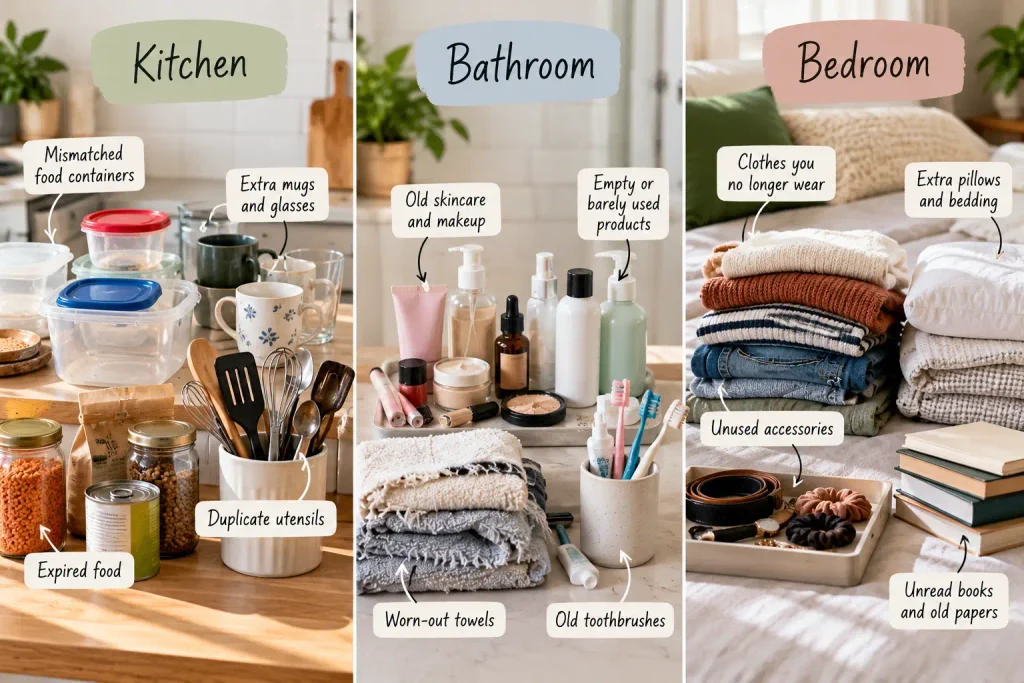
3. Kitchen Decluttering Checklist
A compact kitchen can feel crowded even when everything technically fits inside the cabinets.
Instead of emptying the entire kitchen, work through food, containers, utensils, and appliances separately.
Pantry and refrigerator
- Expired food
- Stale snacks
- Ingredients you’ll realistically never use
- Duplicate opened packages
- Condiments nobody likes
- Old spices that have lost their quality
- Forgotten leftovers
- Empty jars and packaging saved without a purpose
Cabinets and drawers
- Food containers without matching lids
- Loose lids without containers
- Warped or damaged containers
- Excess takeout containers
- Chipped or cracked dishes
- Duplicate cooking utensils
- Extra mugs and water bottles
- Specialty baking tools you never use
- Worn kitchen towels
- Damaged cutting boards
- Unused serving dishes
Countertop appliances
- Appliances you haven’t used in a long time
- Gadgets with duplicate functions
- Accessories for appliances you no longer own
- Equipment that is broken or incomplete
Keep regularly used appliances accessible, but don’t assume everything needs a permanent place on the counter.
✔️ Small-space check: Is there enough clear counter space to prepare a normal meal?
If not, reconsider the items that stay out all day but are only used occasionally.
4. Bathroom Decluttering Checklist
Bathrooms are a good place to make quick progress because many items have obvious reasons to go.
Check the medicine cabinet, vanity, shower, drawers, and linen storage separately.
What to declutter
- Empty shampoo and conditioner bottles
- Toiletries you tried but disliked
- Expired makeup and skincare products
- Old cosmetic samples
- Dried-out nail polish
- Broken hair clips and accessories
- Hair tools you no longer use
- Worn toothbrushes
- Damaged grooming tools
- Duplicate opened products you won’t use up
- Towels that are torn or worn beyond use
- Extra bath mats you don’t need
- Bulky product packaging
- Unwanted or expired medications
For unwanted medications, the U.S. Environmental Protection Agency recommends drug take-back programs rather than routinely flushing medicines or discarding them improperly.
✔️ Small-space check: Can you reach the products you use every morning without moving several others?
If everyday essentials are buried behind backup bottles and forgotten samples, those are the first categories to reconsider.
5. Bedroom Decluttering Checklist
Your bedroom doesn’t need to look empty to feel restful. It simply helps when surfaces and circulation paths aren’t crowded with belongings.
Nightstand and dresser
- Empty cups and packaging
- Old receipts
- Unused chargers
- Books you’re no longer interested in reading
- Accessories you don’t wear
- Toiletries that belong in the bathroom
- Random items without a clear purpose
- Decor you no longer enjoy
Clothing and bedding
- Sleepwear that no longer fits
- Worn-out socks and underwear
- Uncomfortable clothing
- Bedding that doesn’t fit your current beds
- Excess decorative pillows
- Sheets and pillowcases too damaged to use
- Blankets you no longer need
Around the room
- Empty storage containers
- Unused exercise equipment
- Shopping bags left on the floor
- Furniture used only as a place to pile clothes
- Items waiting indefinitely to be returned or repaired
✔️ Small-space check: Can you open drawers, reach the bed, and move around the bedroom without shifting other objects?
If a chair has become a permanent clothing pile, address the clothing first. Then decide whether the chair still earns its place.
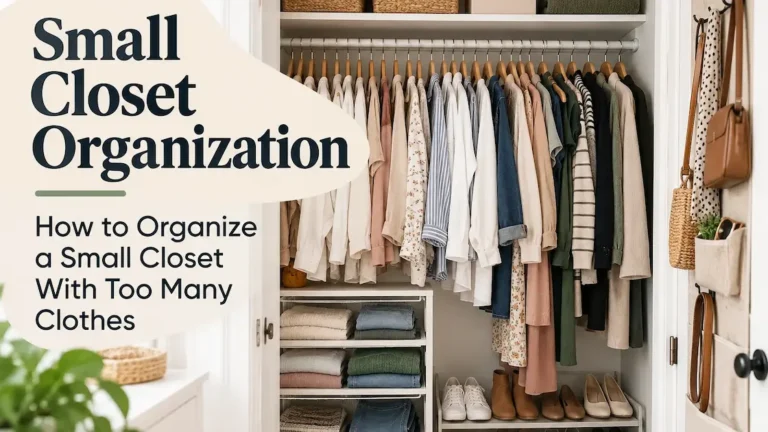
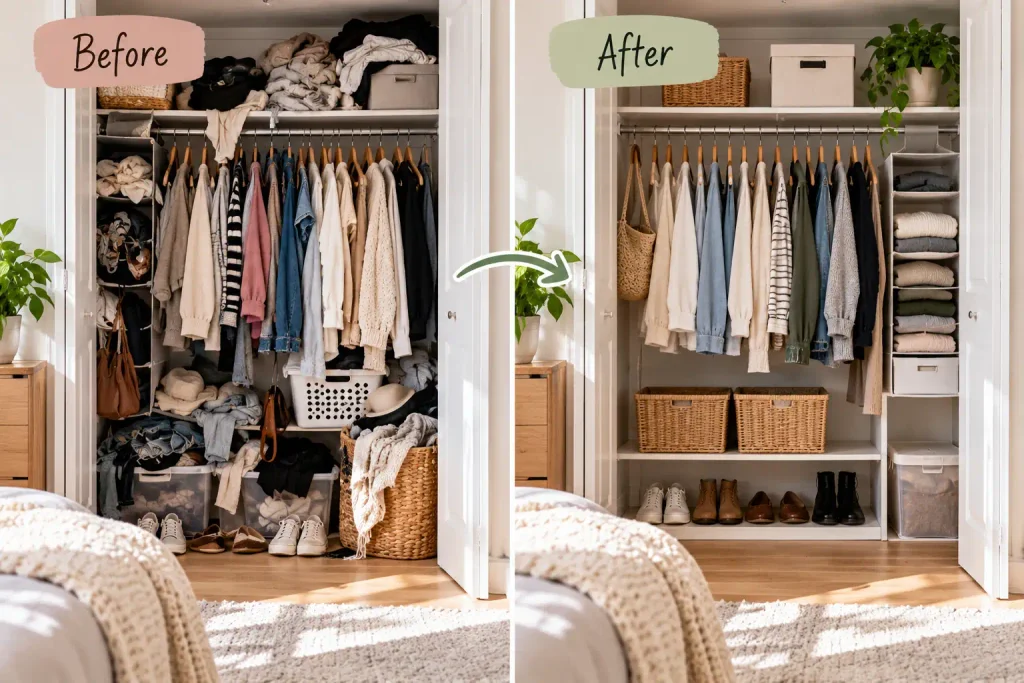
6. Closet Decluttering Checklist
A closet may look full because you own too much clothing, but it can also feel crowded because you’re keeping pieces that no longer suit your life.
Go through one clothing category at a time instead of emptying everything onto the bed.
What to declutter
- Clothes that no longer fit
- Items you consistently avoid wearing
- Uncomfortable shoes
- Clothing that is damaged beyond reasonable repair
- Duplicate pieces you don’t need
- Outdated uniforms or workwear
- Bags you never carry
- Broken jewelry
- Belts and accessories that no longer fit
- Excess hangers
- Empty shoe boxes
- Unused closet organizers
- Items you keep only because they were expensive
Don’t feel pressured to discard clothing simply because you haven’t worn it recently. Occasion wear, seasonal clothing, and sentimental pieces may still be worth keeping.
Instead, focus on whether each piece has a realistic role in your wardrobe.
✔️ Small-space check: Can you see and retrieve your regularly worn clothes without unpacking or rearranging the closet?
If not, reducing the least-used categories may help more than adding another organizer.
7. Home Office and Paper Decluttering Checklist
Even if your home office is just a corner of the living room, paperwork and small supplies can quickly take over.
Desk supplies
- Dried-out pens and markers
- Broken stationery
- Empty notebooks you don’t intend to use
- Duplicate office supplies
- Old cables and adapters
- Unused electronics
- Outdated computer accessories
- Packaging from previous purchases
Paper clutter
- Junk mail
- Old catalogs
- Expired coupons
- Duplicate printed documents
- Completed to-do lists
- Old notes with no continuing purpose
- Manuals that are available online
- Papers that belong in an established filing system
- Receipts you no longer need for returns, taxes, or records
Be careful with tax documents, legal records, identification, financial paperwork, and other records that may need to be retained.
✔️ Small-space check: Can you sit down and begin working without first clearing a pile of paper?
Your work surface should primarily support the work you actually do there.
8. Laundry Area Decluttering Checklist
A laundry area might be a closet, cabinet, or narrow corner. Keeping it functional is more important than filling it with every possible laundry product.
What to declutter
- Empty detergent containers
- Laundry products you no longer use
- Excess specialty products
- Broken laundry baskets
- Damaged hangers
- Old cleaning cloths beyond what you need
- Single socks whose matches are long gone
- Clothing waiting indefinitely for repairs
- Unused ironing accessories
- Items that don’t belong in the laundry area
Don’t pour unwanted chemicals down the drain. Check local disposal guidance for products that may require special handling.
✔️ Small-space check: Can you load, unload, sort, and fold laundry without moving stored supplies?
If not, prioritize keeping the functional area accessible.
9. Kids’ Items and Multipurpose Rooms
In family homes, toys, school supplies, and outgrown belongings can spread far beyond children’s bedrooms.
Focus on items that are damaged, outgrown, or no longer used.
What to declutter
- Broken toys
- Outgrown toys
- Incomplete games and puzzles
- Duplicate toys
- Dried-out markers
- Used-up craft supplies
- Damaged books
- Clothing children have outgrown
- Shoes that no longer fit
- Unused baby gear
- School papers that don’t need to be kept
- Unfinished projects nobody plans to complete
In shared spaces, consider how much room each category can reasonably occupy.
A shelf or drawer can provide a useful physical boundary. When a category stops fitting, review what is inside before buying more storage.
✔️ Small-space check: Can the room switch between its everyday functions without requiring a major cleanup?
A living room that doubles as a playroom should still be comfortable when playtime ends.
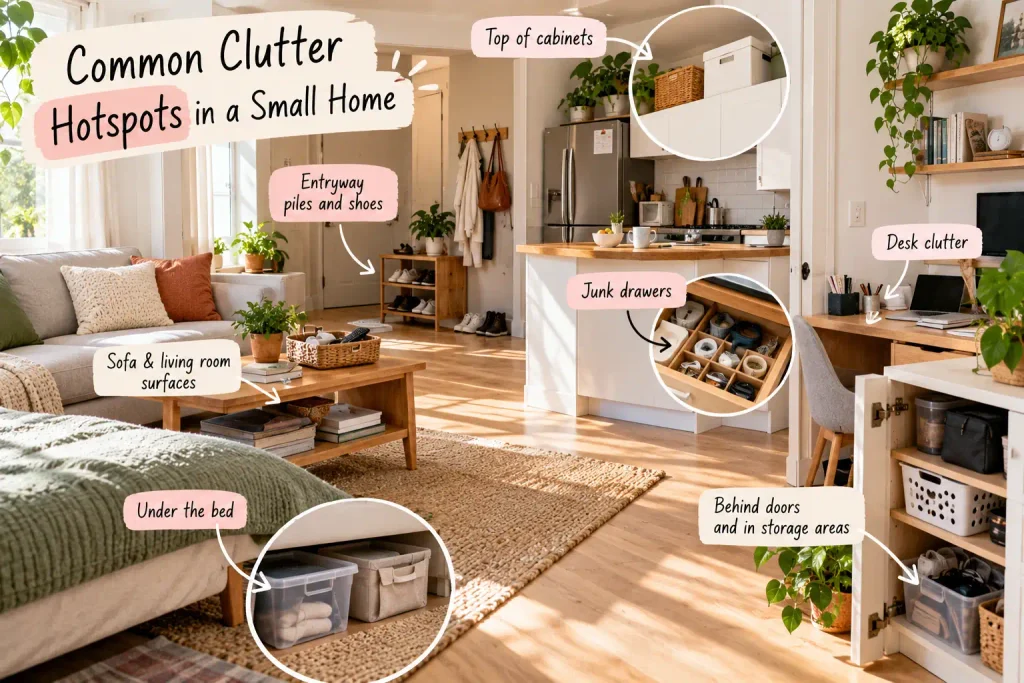
10. Storage Closets, Under-Bed Space, and Other Hidden Areas
Hidden storage is useful, but it’s also where unresolved decisions tend to accumulate.
These areas often contain things you haven’t looked at in months or years.
What to declutter
- Empty appliance and electronics boxes
- Broken household items
- Mystery cables
- Duplicate tools
- Unused hobby supplies
- Old magazines
- Bedding that no longer fits
- Extra bags and luggage you don’t need
- Holiday decorations you no longer display
- Empty storage bins
- Unused gift wrap and damaged decorations
- Supplies from abandoned projects
- Items saved for an unlikely future situation
- Boxes you repeatedly move without opening
Check paints, solvents, certain cleaning products, batteries, and other potentially hazardous materials before disposal. The EPA’s household hazardous waste guidance explains why these items may need special collection or disposal.
✔️ Small-space check: Do you know what’s stored in each area, and can you retrieve it without unpacking several unrelated boxes?
Under-bed storage, high shelves, and utility closets should support your household—not become permanent hiding places for things you don’t want to decide about.
Quick Things-to-Declutter Checklist for Any Room
Don’t have time to go through an entire room?
Use this shorter things to declutter checklist to spot common clutter categories almost anywhere.
- Broken items
- Expired products
- Empty packaging
- Unnecessary duplicates
- Things that no longer fit
- Items you don’t enjoy using
- Accessories for products you no longer own
- Outdated paperwork
- Unused promotional freebies
- Items waiting too long to be repaired
- Things you keep moving but never use
- Belongings that should be stored elsewhere
- Empty organizers with no useful purpose
- Objects taking up valuable space without adding much value
This quick scan works particularly well when a small room feels crowded but you can’t immediately identify why.
What to Do After You Finish Each Room
A room isn’t fully decluttered just because you’ve collected a pile of things to remove.
Before moving on, deal with what you’ve sorted.
Return misplaced items. Put belongings back where they actually belong rather than allowing the relocation basket to become another clutter pile.
Take out trash and recycling. Remove what you can immediately, following local recycling and disposal rules.
Give donations a clear exit plan. Put usable items together and arrange a realistic time to drop them off or have them collected.
Set a deadline for selling. Selling can make sense for valuable belongings, but don’t let an unsold-items pile occupy your home indefinitely.
Then look at what remains.
You may discover that a shelf, drawer, or basket now has extra room. That’s fine. You don’t need to fill every available space again.
How Often Should You Use This Room-by-Room Declutter Checklist?
You don’t need to repeat a whole-house decluttering session every month.
Different spaces accumulate clutter at different speeds.
| Area | Suggested review |
|---|---|
| Entryway | Every 2–4 weeks |
| Kitchen and pantry | Every 2–3 months |
| Bathroom | Every 2–3 months |
| Living room | When surfaces begin collecting excess items |
| Bedroom | Every few months |
| Closet | Around seasonal clothing changes |
| Paper and home office | Monthly or as paperwork accumulates |
| Laundry area | Every few months |
| Kids’ belongings | As interests, needs, and sizes change |
| Hidden storage | Once or twice a year |
These are flexible starting points, not rules.
If a room continues working well, there’s no need to pull everything apart just because the calendar says it’s time.
How to Keep Your Small Home From Filling Up Again
Decluttering creates breathing room, but the choices you make afterward determine how long that space lasts.
A few practical habits can help:
- Pause before bringing home duplicates or replacement items.
- Consider where a new purchase will live before buying it.
- Return frequently used items to their designated places.
- Keep a donation bag or box only if it has a clear exit routine.
- Revisit crowded categories before purchasing more organizers.
One useful approach is the one-in, one-out rule: when you bring a new item into a category that is already full, consider letting go of something you no longer need.
It doesn’t have to apply to everything you buy, but it can be particularly helpful for clothing, mugs, decor, and other categories that gradually expand.
Above all, avoid treating decluttering as a one-time project that must be done perfectly.
A small home will always need some adjustment as your routines, interests, and household needs change.
Final Thoughts
A small home doesn’t need to contain fewer things than everyone else’s. It needs to contain an amount of belongings that works for the people living there.
That’s what makes a room-by-room declutter checklist so useful.
Instead of trying to solve the entire house at once, you can focus on the decisions that matter in each space.
Start with the room that causes the most everyday frustration. Remove what no longer serves you, give the remaining essentials enough room, and move on when you’re ready.
Save this home decluttering checklist so you can return to it whenever your home begins to feel crowded again.
A more comfortable small home often starts with a few less things—not another storage solution.