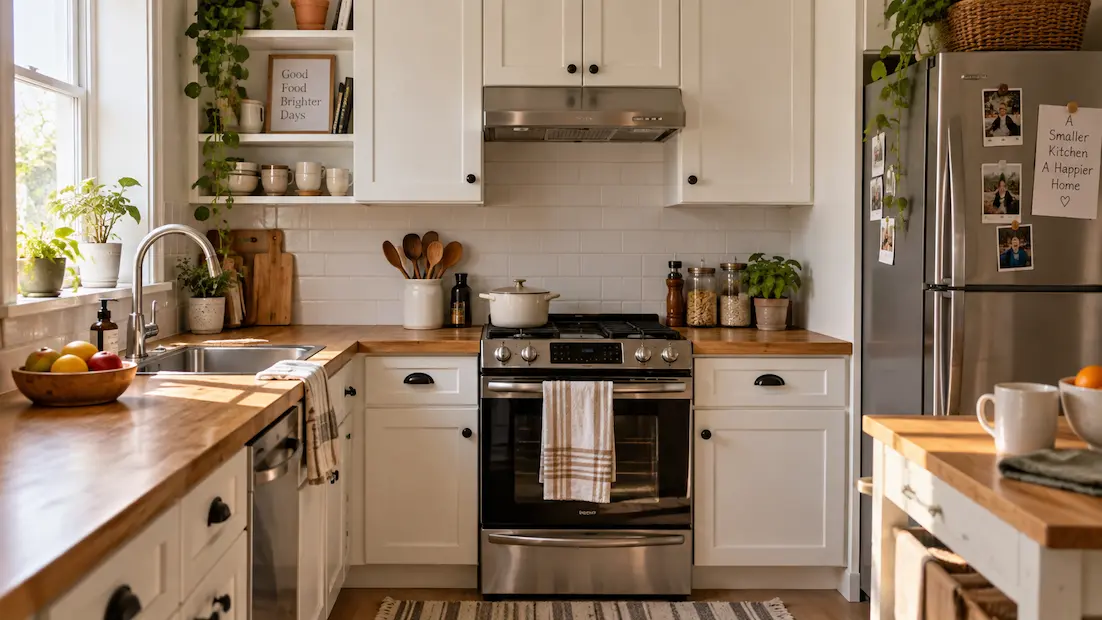
How to Organize a Small Kitchen With No Pantry (10 Smart Tips)
No pantry, barely enough cabinets, and groceries that somehow end up on every available counter? It doesn’t take much for a small kitchen to feel overcrowded.
But you don’t need to squeeze in a pantry cabinet to make things work. A few well-planned storage zones can keep food accessible, protect your cooking space, and make everyday routines easier.
Here’s how to organize a small kitchen with no pantry, using the space you already have before buying anything new.
Start by Making Room for the Food You Actually Use
Before rearranging your groceries, look at what’s taking up your cabinets.
That oversized roasting pan, the stack of mismatched food containers, and the waffle maker you haven’t touched in months might be occupying the very shelves your everyday food needs.
Start with a quick cabinet audit:
- Keep nearby: Everyday dishes, cooking tools, and regularly used ingredients.
- Move higher or farther away: Occasional appliances, serving pieces, and seasonal equipment.
- Let go: Expired food, unnecessary duplicates, broken tools, and containers without matching lids.
You don’t have to empty the entire kitchen at once. Start with the cabinet most likely to become your main food-storage area.
For example, moving a rarely used stand mixer out of a lower cabinet might free enough room for rice, pasta, canned goods, and breakfast supplies.
That’s meaningful storage gained without adding another piece of furniture.
Think in Food Zones Instead of One Big Pantry
A traditional pantry keeps most dry groceries together. In a tiny kitchen, that arrangement may not be practical.
Instead, create a small network of food-storage zones based on how you cook and eat.
Your breakfast foods might belong near the coffee maker, while pasta, rice, and canned tomatoes make more sense near the cooking area. Snacks can occupy a drawer that everyone can reach.
The idea is simple: Store related items together, even when they can’t all fit in one cabinet.
You aren’t trying to recreate a pantry room. You’re making the existing kitchen work like an organized food-storage system.
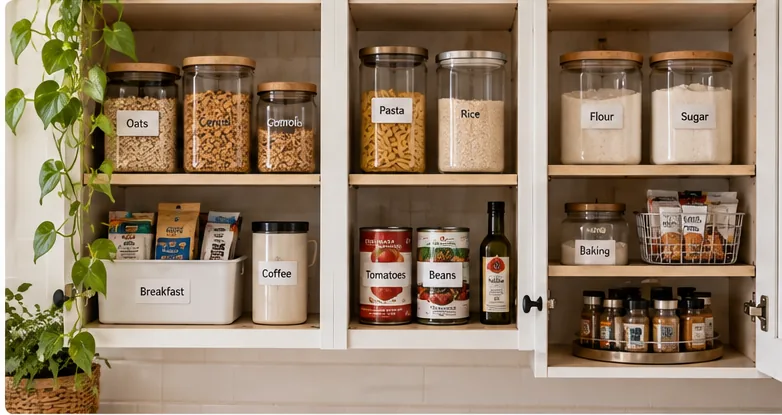
10 Ways to Organize a Small Kitchen Without a Pantry
These ideas work best as a combination rather than ten separate projects. Start with the changes that address your biggest daily frustrations.
1. Give Everyday Groceries a Primary Home
Choose one cabinet, or two neighboring cabinets, as the main home for dry groceries.
Look for a location that’s comfortable to reach and reasonably close to where you prepare meals.
For instance, one upper cabinet could hold oats, cereal, pasta, and rice, while the adjacent cabinet holds canned beans, tomatoes, and cooking staples.
You can still store snacks or baking supplies elsewhere. The important thing is having a predictable starting point when putting groceries away.
Avoid choosing a cabinet simply because it’s empty. A shelf above the refrigerator might have plenty of space, but it isn’t convenient for food you reach for every morning.
2. Arrange Food Around Your Daily Routines
Think about what you actually make during a normal week.
If breakfast usually means oatmeal, keep the oats, nuts, cinnamon, and measuring scoop together. If you pack lunches every morning, give lunchbox snacks and wraps an easy-to-reach spot.
This is more useful than organizing everything strictly by package size.
A simple way to divide groceries is:
- Daily: Breakfast staples, coffee, cooking oil, and frequently used ingredients.
- Weekly: Pasta, grains, canned foods, and regular baking supplies.
- Occasional: Specialty ingredients, bulk purchases, and holiday baking items.
Keep the first group at comfortable reaching height. The others can occupy higher or less convenient shelves.
When your kitchen follows your routines, putting things away becomes much easier.
3. Use the Empty Height Inside Cabinets
Sometimes a cabinet looks full because everything is sitting on one level, even though there’s plenty of unused space above it.
Look at shelves holding short jars, canned foods, mugs, or small packages.
A shelf riser can create a second level without requiring a permanent cabinet modification. Adjustable shelves can also help when there’s too much clearance above short items.
Imagine a cabinet where six cans occupy the front of a tall shelf. A properly sized riser could create an upper level for lightweight packages while keeping the cans visible below.
Just don’t stack things so tightly that reaching one item means moving everything around it.
Measure the available height before adding organizers, and check that the cabinet door can still close comfortably.
4. Stop Losing Groceries in Deep Cabinets
Deep cabinets can hold a surprising amount of food. Unfortunately, they can also hide half of it.
You buy another bag of rice because you can’t see the first one. The crackers at the back go stale. A jar of sauce turns up months after you needed it.
Try grouping smaller packages into pull-out bins instead of lining everything up in several rows.
A bin for baking ingredients or snack packets can slide forward as one group. For jars and bottles, a turntable may work better if the shelf has enough clearance.
A useful before-and-after example:
Before: Pasta, canned beans, crackers, and baking supplies are stacked together, with newer groceries pushed in front of older ones.
After: Pasta and grains occupy one section, canned foods stay visible, and a handled bin keeps smaller baking packets together.
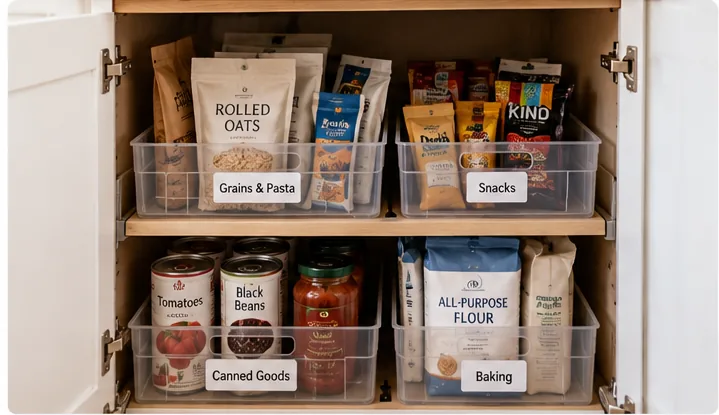
The cabinet hasn’t grown. You can simply see and reach more of what you already own.
5. Turn an Underused Drawer Into Food Storage
Not every kitchen drawer needs to hold utensils.
If your silverware and cooking tools already fit comfortably, an extra drawer might work better as a mini pantry.
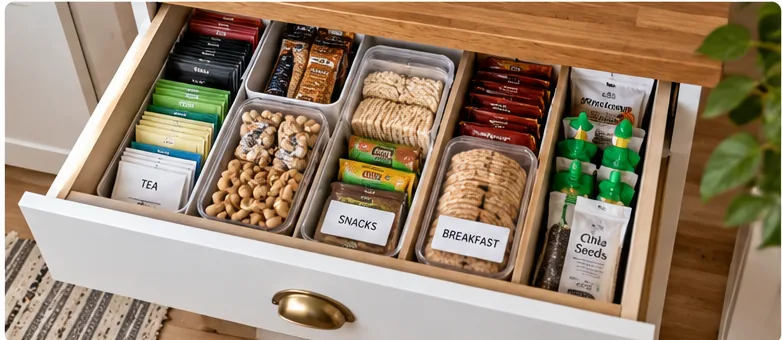
Deep drawers are particularly useful for snack packets, tea, coffee supplies, and packaged dry foods. Shallow drawers can hold wraps, flat packages, or smaller items that tend to disappear in cabinets.
Picture a kitchen with three drawers. The first holds cutlery, the second holds cooking utensils, and the third has become a collection of takeout menus, spare gadgets, and miscellaneous items.
Clearing that third drawer could give you a dedicated snack station without using any additional cabinet space.
Choose the contents based on drawer depth and weight capacity. Heavy cans and large bags of flour aren’t suitable for every drawer.
6. Free Up Cabinets With a Few Wall and Door Organizers
Sometimes the easiest way to make room for groceries is to move non-food items out of the cabinets.
Measuring spoons, oven mitts, lightweight utensils, and other frequently used tools may work well on hooks or rails.
The inside of a suitable cabinet door can also hold small, lightweight items, provided the organizer doesn’t interfere with shelves or hinges.
In a rental, look for reversible options and check surface compatibility and lease restrictions before attaching anything.
You don’t need to cover every wall with storage, either.
One well-placed rail beside the prep area may free up more useful drawer space than several decorative shelves scattered around the kitchen.
7. Give Your Countertop Some Breathing Room
Without a pantry, the countertop often becomes the place where groceries go when nobody knows where else to put them.
First comes the cereal box. Then the bread, snack bags, coffee supplies, and a few cans that never quite make it into a cabinet.
Before long, there’s barely enough room to chop vegetables.
Try deciding what genuinely deserves to stay out.
A coffee maker you use every morning might earn its spot. So might a fruit bowl or a small tray with frequently used cooking essentials.
But unopened pasta, backup snacks, and rarely used appliances don’t need permanent countertop homes.
If you’re unsure, clear one section of counter completely and use the kitchen normally for several days.
Notice what you actually need within reach. Everything else can be reconsidered.
8. Move Occasional Kitchen Items Out of Prime Storage
A small kitchen doesn’t have to hold every piece of cooking equipment within arm’s reach.
That large holiday platter might fit perfectly on a high shelf. A specialty cake stand could live in a nearby dining-room cabinet. An appliance used twice a year may not deserve an entire lower cupboard.
Focus on the storage spaces that are easiest to reach.
Those should support daily cooking, cleaning, and eating.
For example, moving an oversized stockpot to an appropriate upper storage area could free a lower cabinet for everyday cookware. That, in turn, might free an upper cabinet for groceries.
Sometimes organizing a kitchen without a pantry is less about moving food and more about moving everything competing with it.
9. Keep Backstock Within a Set Limit
Bulk purchases can be tempting, especially when something you use regularly goes on sale.
But in a kitchen without a pantry, five backup boxes of cereal may cost more storage space than they’re worth.
Give extra groceries one defined home, such as a single shelf or bin.
When that space is full, use what you already have before buying more.
You might keep one unopened replacement of your most-used staples, rather than stocking up on several months’ worth.
Place older packages toward the front and check dates when restocking.
Keep shelf-stable foods in a cool, clean, dry location, away from excessive heat and moisture. The space under the sink, for example, is better reserved for suitable non-food supplies than for groceries.
10. Add Extra Storage Only When There’s a Clear Gap
After reorganizing your cabinets, you might discover that the kitchen genuinely needs more storage.
That’s when a small freestanding unit could make sense.
But start with the problem, not the product.
Maybe you need a place for twelve inches’ worth of dry groceries. Maybe your lower cabinets are full of cookware and there’s no convenient home for canned foods.
Measure the available area, including the clearance needed to open doors and walk through the kitchen.
A narrow cart or compact cabinet should solve that specific shortage without making the room harder to use.
If you’d rather create one dedicated food-storage area, that’s a separate project from organizing the existing kitchen—and worth planning around your available floor space.
A Practical No-Pantry Kitchen Layout
Let’s put the ideas together.
Imagine a small apartment kitchen with four upper cabinets, three lower cabinets, three drawers, and a short stretch of countertop.
There’s no pantry, and adding a freestanding cabinet would make the walkway too narrow.
Here’s one possible arrangement:
| Storage space | What goes there |
|---|---|
| Upper cabinet 1 | Everyday plates, bowls, and glasses |
| Upper cabinet 2 | Breakfast foods, coffee, and tea |
| Upper cabinet 3 | Pasta, rice, grains, and canned foods |
| Upper cabinet 4 | Baking ingredients, spices, and occasional staples |
| Lower cabinet 1 | Pots, pans, and lids |
| Lower cabinet 2 | Mixing bowls and regularly used appliances |
| Lower cabinet 3 | Food containers and kitchen supplies |
| Drawer 1 | Cutlery |
| Drawer 2 | Cooking utensils |
| Drawer 3 | Snacks, wraps, and small packaged foods |
The countertop stays mostly clear, with space for food preparation and perhaps one frequently used appliance.
This isn’t the only workable layout.
Someone who bakes every weekend may need baking ingredients in a more accessible location. A household with young children might prefer snacks in a lower drawer.
The point is to give each area a job, then adjust the arrangement around your household’s habits.
Making a No-Pantry Kitchen Work in a Rental
Apartment kitchen organization often comes with another challenge: you can’t make permanent changes.
Fortunately, the most useful improvements don’t necessarily involve drilling or installing new cabinets.
Start by rearranging existing shelves, changing what each drawer holds, and using removable bins or freestanding risers where they genuinely improve access.
If you use adhesive hooks or door-mounted organizers, follow the manufacturer’s instructions and check that they’re appropriate for the surface and weight.
Avoid investing in a complicated setup that only fits your current apartment.
Simple, movable organizers are easier to adapt if your next kitchen has different cabinet dimensions.
Five Mistakes That Make a Small Kitchen Feel Even Smaller
Even an organized-looking kitchen can be frustrating if the system underneath doesn’t work.
Buying Matching Containers for Everything
Uniform jars can look lovely, but they aren’t always space-efficient.
Some original packages fit narrow cabinets better than rigid containers. Decant foods when it improves storage or everyday use, not just for appearance.
Filling Every Inch of Cabinet Space
A tightly packed cabinet may technically hold more, but that doesn’t mean it’s easier to use.
Leave enough clearance to lift, slide, and remove items without dismantling the arrangement.
Storing Food Wherever There’s an Empty Spot
Random storage makes it difficult to remember what you own.
Keep categories together whenever practical, even if that means leaving a little unused space in another cabinet.
Keeping Too Many Just-in-Case Items
Extra utensils, duplicate cookware, and rarely used gadgets compete directly with groceries for storage.
Before buying another organizer, ask whether something already in the cabinet deserves to stay there.
Copying an Organization System That Doesn’t Match Your Kitchen
A beautifully organized pantry on Pinterest might rely on cabinet dimensions, storage capacity, or shopping habits you don’t have.
Borrow the useful ideas, not the entire setup.
A Simple Weekly Reset to Keep Things Organized
A good system shouldn’t require another full reorganization every month.
Spend about 10–20 minutes once a week checking the places where clutter tends to return.
- Put stray groceries back into their assigned zones.
- Check open packages and use older foods first.
- Combine duplicates when appropriate and safe.
- Make a short shopping list based on what’s actually missing.
- Clear anything that has settled on the countertop.
If one area keeps overflowing, pay attention to why.
Maybe the snack drawer is too small. Maybe breakfast supplies belong closer to the coffee maker. Or maybe you’re buying more backstock than your kitchen can comfortably hold.
Small adjustments are usually easier than starting over.
Make Your Small Kitchen Work for You
A kitchen doesn’t need a traditional pantry to feel organized.
Give everyday groceries predictable homes, reserve convenient storage for the things you use most, and make the most of your existing cabinets and drawers before adding more.
The best no-pantry setup is one that makes cooking, shopping, and putting things away feel a little easier every day.