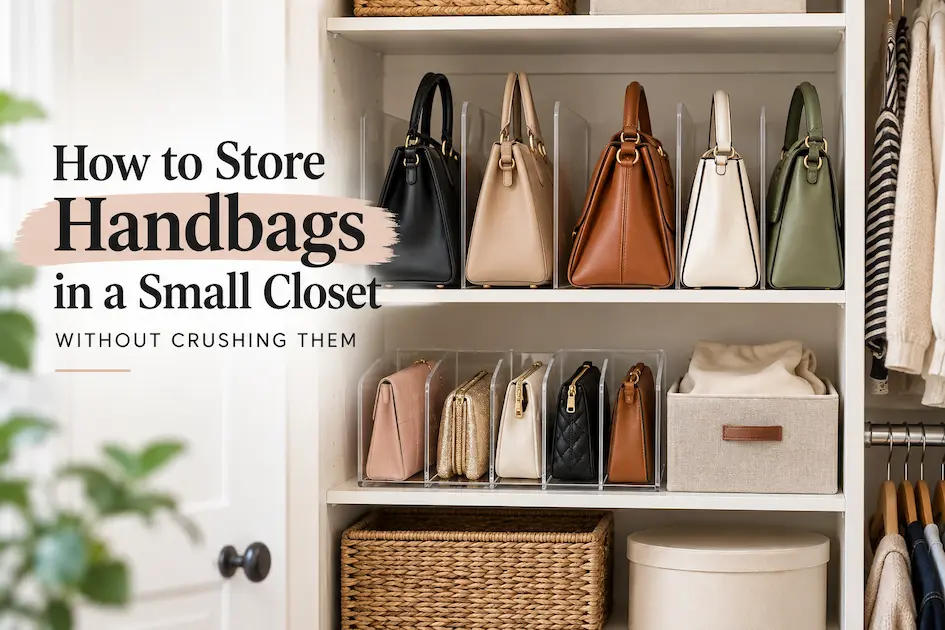
How to Store Handbags in a Small Closet Without Crushing Them
Handbags can take up more closet space than you expect. One tote leans against another, smaller purses disappear behind larger bags, and before long, your favorite handbag ends up with a flattened side or bent handle.
The challenge with handbag storage in a small closet isn’t simply finding a place for every bag. It’s keeping them accessible without squeezing, stacking, or putting unnecessary pressure on their shape.
Fortunately, you don’t need a dedicated handbag cabinet or an expensive closet system. A few well-planned storage zones can make even a narrow closet work better.
Quick Answer: The best way to store handbags in a small closet is to keep structured bags upright on shelves, use dividers to prevent leaning, and place small clutches in shallow compartments. Reserve hanging organizers for lightweight bags, support soft handbags with gentle stuffing, and keep frequently used purses within easy reach.
Start by Sorting and Measuring Your Closet Space
Before buying another organizer, take a few minutes to understand your handbag collection and the space available.
This prevents a common small-closet problem: purchasing storage accessories that technically fit the shelf but leave too little room for the handbags themselves.
Sort Handbags by Shape and How Often You Use Them
Take your handbags out of the closet and separate them into three groups:
- Everyday handbags: Purses you reach for several times a week. These deserve the easiest access.
- Occasional-use handbags: Bags for weekends, dinners, or special events. These can go on higher shelves.
- Seasonal or rarely used handbags: Bags you won’t need for a while. Store these in protected, less accessible locations.
Next, separate structured bags from soft, flexible ones.
Structured totes and satchels usually need a stable surface that supports their bases. Soft hobo bags and unstructured purses may need gentle interior support to prevent collapsing.
You don’t need to get rid of handbags simply because your closet is small. But you do need to decide which bags deserve the limited space you use every day.
Measure Your Available Storage Space
Measure the usable width, depth, and height of the closet shelf or compartment where you plan to store handbags.
🎯 Pay particular attention to:
- Shelf depth: The handbag’s base should fit comfortably without hanging over the edge.
- Shelf height: Include rigid handles when measuring the bag’s total height.
- Available width: Leave enough room between handbags so they don’t press against one another.
- Removal space: Make sure you can lift or slide out a bag without bending its handles or scraping its sides.
- Hanging-rod space: Consider how much clothing room a hanging organizer would take away.
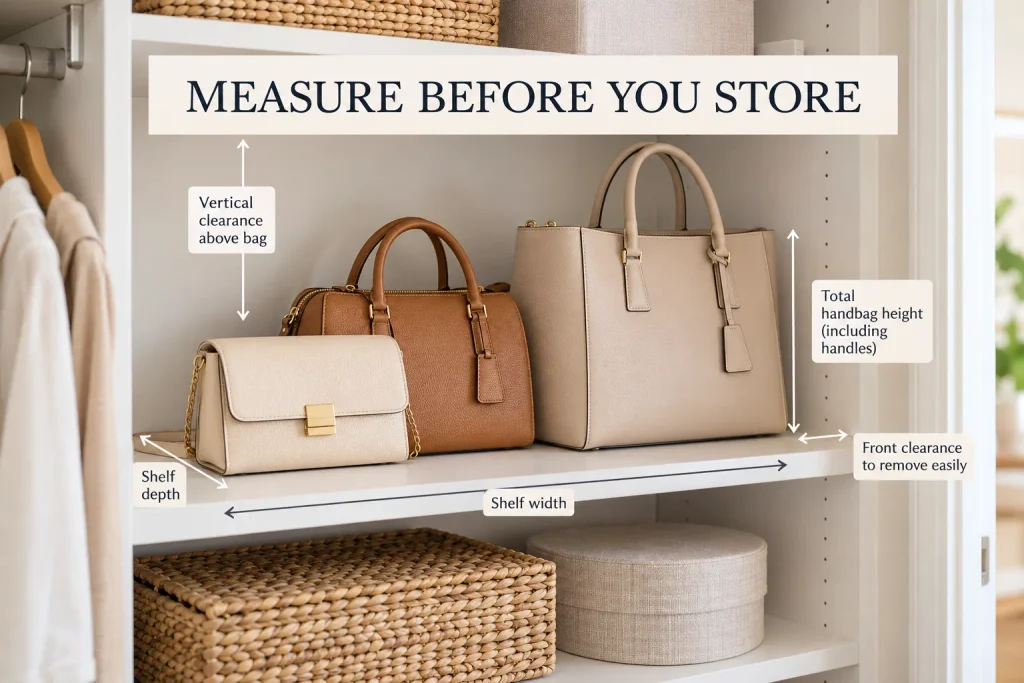
If a handbag fits only when its handles are flattened or its sides are squeezed inward, that spot isn’t suitable.
For a closet that’s already crowded with clothes, it may help to [organize your small closet around what you actually use] before dedicating more space to accessories.
7 Smart Ways to Store Handbags in a Small Closet
The best handbag storage ideas for small closets make use of existing space without creating new problems.
Start with the shelves and compartments you already have. Then consider adding organizers only where they solve a specific issue.
1. Stand Structured Handbags Upright on Shelves
For most structured handbags, an open closet shelf is the simplest storage solution.
Place totes, satchels, and purses with firm bases upright, allowing their weight to rest on the bottom of the bag.
Arrange them side by side rather than stacking one on top of another.
The goal is to give each handbag enough space to maintain its natural shape while remaining easy to remove.
If possible, keep your everyday bags at a comfortable reaching height. You shouldn’t have to move several handbags every time you want a different purse.
✔️ Best for: Structured totes, leather satchels, and medium-sized everyday handbags.
💡 Small-space tip: A shelf with four comfortably spaced handbags is more useful than one holding six bags squeezed tightly together.
2. Add Shelf Dividers to Keep Handbags From Leaning
If your handbags regularly tip over, shelf dividers can make a noticeable difference.
Clear acrylic or smooth-edged dividers create individual spaces that help bags stand upright without leaning against their neighbors.
They’re especially useful for medium-sized purses that don’t stand securely on their own but are too structured to fold.
Choose adjustable dividers when possible. Handbags vary in width, so fixed compartments may waste space or create unnecessary pressure.
✔️ Best for: Medium handbags, structured crossbody bags, and collections with several similarly sized purses.
🚫 Avoid: Narrow compartments that force a handbag to squeeze between dividers.
3. Use Shallow Compartments for Clutches and Mini Bags
Small handbags are easy to lose behind larger ones, especially on deep closet shelves.
A shallow bin with dividers can keep clutches, mini bags, and slim evening purses together without piling them into a stack.
Position each bag so you can see it and remove it without disturbing the others.
For delicate clutches, use soft fabric sleeves or individual compartments to reduce rubbing against hardware and embellishments.
You can also repurpose a shallow drawer organizer if it fits your shelf.
✔️ Best for: Clutches, evening purses, mini crossbody bags, and small accessories.
💡 Small-space tip: Choose one shallow container instead of several deep baskets. Deep bins often encourage stacking, which makes smaller bags harder to find.
4. Try a Hanging Organizer for Lightweight Handbags
A fabric hanging organizer can turn unused vertical space into several handbag compartments.
This is helpful when your closet has a hanging rod but very little shelving.
Choose an organizer with supportive compartment bottoms rather than narrow pockets that compress the sides of your handbags.
Lightweight fabric purses and compact bags generally work better in these organizers than heavy structured leather bags.
Remember that hanging organizers still take up space. A wide organizer may solve your handbag problem while making your clothing section more crowded.
✔️ Best for: Lightweight handbags, soft fabric purses, and compact everyday bags.
🚫 Avoid: Overloading the compartments or forcing rigid handbags into spaces that are too small.
5. Use the Inside of the Closet Door Carefully
The back of a closet door can provide useful handbag storage without occupying shelf space.
Slim over-the-door organizers with supportive pockets are particularly suitable for small, lightweight purses.
Hooks can also be convenient for temporarily holding a frequently used fabric bag, provided the straps and hardware can tolerate the weight.
However, heavy leather handbags shouldn’t hang by their handles for extended periods.
Before installing a door organizer, check the clearance between the door and the closet’s contents.
If the organizer pushes handbags into shelves or prevents the door from closing properly, it isn’t saving usable space.
✔️ Best for: Lightweight bags in regular rotation.
💡 Small-space tip: Test the door clearance before purchasing an organizer with deep pockets or protruding hooks.
6. Store Occasional-Use Handbags on Upper Shelves
Upper closet shelves are often better suited to handbags you don’t need every day.
Move seasonal purses, evening bags, and occasional-use handbags above your everyday storage zone.
Before putting them away, empty their contents, support their shape if needed, and protect them with appropriate dust covers.
Place them where they won’t be crushed by heavy storage boxes or crowded against other belongings.
If your closet has a particularly deep upper shelf, keep the handbags you need most often closer to the front.
✔️ Best for: Seasonal handbags, special-occasion purses, and infrequently used structured bags.
💡 Small-space tip: Avoid creating multiple layers of handbags behind one another. If you can’t reach the back row without moving everything in front, the shelf may be too crowded.
7. Add a Shelf Insert When Vertical Space Is Wasted
Some closet shelves are tall enough to hold two levels of small handbags but are currently being used for just one row.
A removable shelf insert or adjustable shelf can help make better use of that space.
For example, a lower level might hold compact structured purses while the upper level stores clutches or small fabric bags.
But measure carefully before adding another shelf.
If the lower handbags require bent handles or must be squeezed underneath the insert, the setup defeats the purpose.
✔️ Best for: Closets with tall shelf compartments and smaller handbags.
🚫 Avoid: Adding shelves simply to increase storage capacity when there isn’t enough clearance for the bags.
How to Keep Handbags From Losing Their Shape
Finding enough space is only half the challenge. Good handbag storage should also protect the material, straps, and original shape of each bag.
Use Gentle Stuffing to Support the Shape
Empty handbags before storing them, including small items hidden in interior pockets.
For bags that tend to collapse, add clean, soft stuffing to support the sides.
Acid-free tissue paper, clean cotton cloths, or appropriately sized handbag inserts can work well.
Use only enough material to help the bag retain its natural silhouette.
Overstuffing can stretch seams or distort the shape just as easily as storing a bag completely unsupported.
Not every soft handbag needs to stand upright. Some flexible bags are better stored resting in their natural shape on a supportive surface.
Protect Straps, Handles, and Hardware
Long straps can become tangled, while metal buckles and clasps may leave marks on neighboring handbags.
Where possible, loosely arrange removable straps inside the bag, preferably in a soft pouch.
For attached straps, avoid tight knots or sharp bends.
Keep heavy metal hardware from pressing directly against delicate leather or fabric during long-term storage.
Most importantly, don’t hang a heavy handbag by its handles for months simply to free up shelf space.
According to Coach’s official handbag storage guidance, prolonged hanging can stretch materials, while gentle stuffing helps bags maintain their shape.
Use Breathable Protection for Long-Term Storage

Dust bags are useful for handbags you don’t carry regularly.
For leather handbags, breathable fabric protection is generally preferable to tightly sealed plastic, which may trap moisture.
Store bags in a cool, dry, ventilated area away from direct sunlight.
If a handbag becomes damp, allow it to dry according to the manufacturer’s instructions before returning it to storage.
Specialty leather, suede, vintage bags, and delicate materials may require different care. Always prioritize the manufacturer’s recommendations when available.
Which Handbag Storage Method Works Best?
Not every purse needs the same organizer. Use this guide to choose a storage method based on the bag’s construction rather than its appearance alone.
| Handbag Type | Recommended Storage | Avoid |
|---|---|---|
| Structured tote | Upright on a shelf with light interior support | Stacking heavy items on top |
| Leather satchel | Separate shelf space or roomy divider | Prolonged hanging by handles |
| Soft hobo bag | Light stuffing and a supportive resting position | Tight compartments |
| Crossbody bag | Shelf or supportive cubby with straps arranged loosely | Tangled or tightly folded straps |
| Clutch | Shallow divided bin or protective sleeve | Stacking beneath larger purses |
| Canvas tote | Shelf or supportive compartment; fold only if suitable | Sharp folds through rigid details |
| Delicate or designer bag | Individual supported space with suitable dust cover | Compression, friction, and poorly ventilated storage |
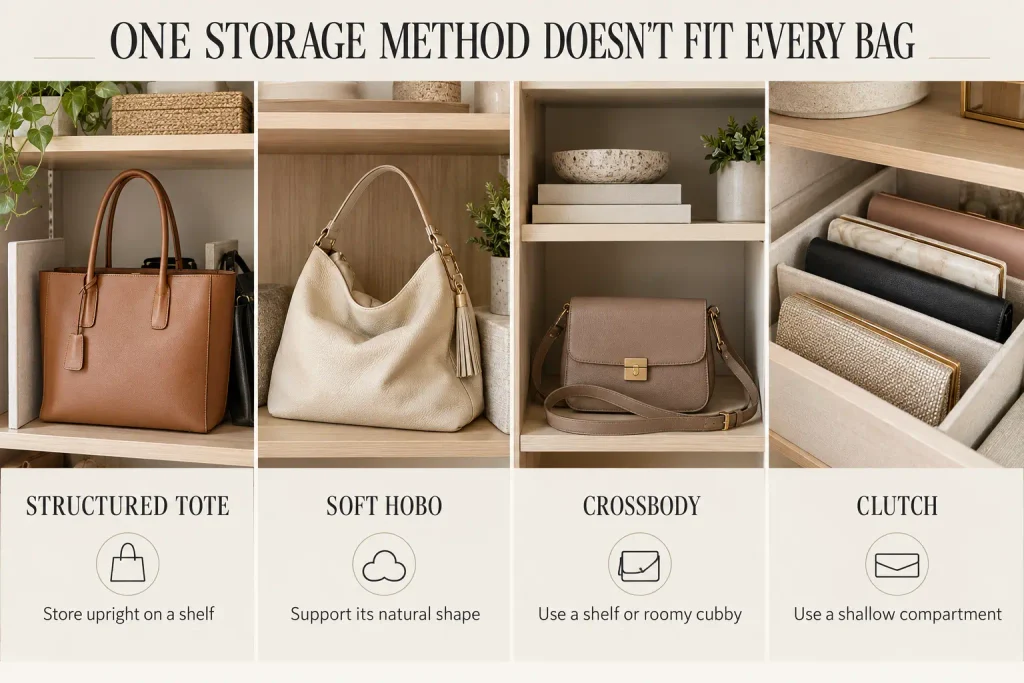
For purse storage in a small closet, the most effective solution is often a combination of methods rather than one large organizer.
A shelf divider may work for your everyday handbags, while a shallow bin handles clutches and an upper shelf holds occasional-use bags.
One Shelf, Six Handbags: A Practical Small-Closet Setup
You don’t need a Pinterest-perfect closet to create a functional handbag storage system.
Imagine you have six handbags: two everyday purses, two structured handbags used occasionally, and two small clutches.
If your available shelf is wide and deep enough, you could organize them into three zones.
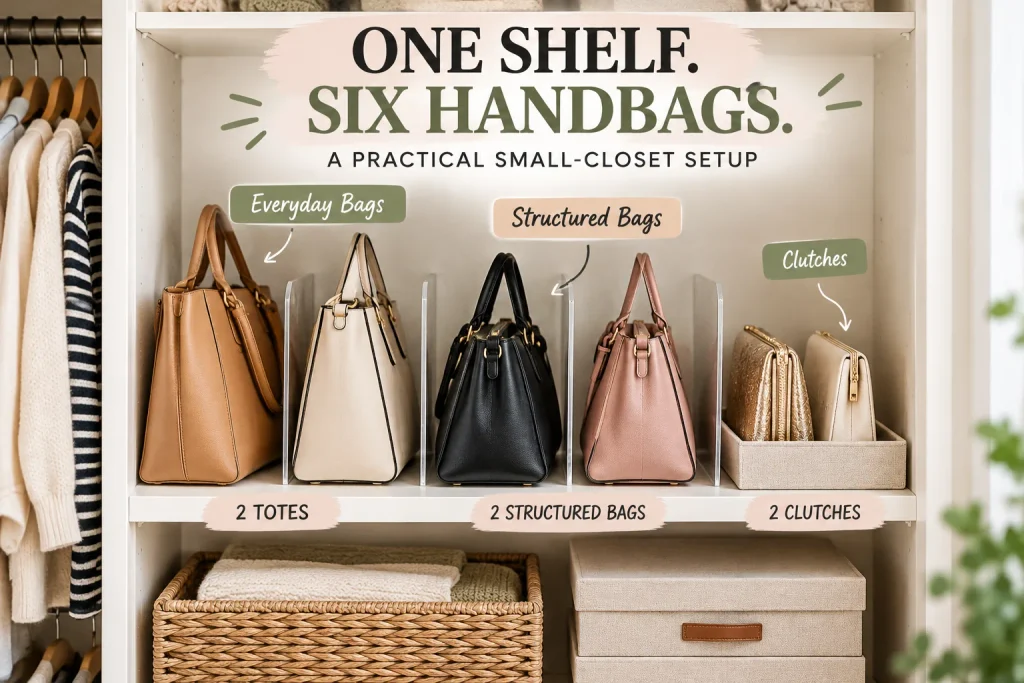
Zone 1: Everyday Handbags
Place your two most-used handbags toward the accessible side of the shelf.
Keep them upright and leave enough room to lift either one out without moving the other.
These bags should require the least effort to reach.
Zone 2: Structured Handbags
Use the middle section for two structured handbags, ideally separated with adjustable dividers if they tend to lean.
Support their interiors if necessary and keep their handles in a natural position.
Don’t force the bags to touch simply to fit another item onto the shelf.
Zone 3: Small Clutches
Place the two clutches in a shallow, divided container.
This keeps smaller bags visible while preventing them from slipping behind larger handbags.
The container can sit beside your structured purses, provided the shelf has enough usable width.
Important: This six-bag arrangement is only an example, not a target capacity. If your shelf comfortably fits four handbags instead of six, store the remaining bags somewhere else rather than compressing them.
For very narrow closets, prioritize two or three regularly used purses and move occasional-use handbags to another clean, dry storage location.
The goal is to create a layout that works with your actual closet dimensions.
Handbag Storage Mistakes That Can Cause Damage
Even a well-organized closet can damage handbags if the storage method puts unnecessary pressure on them.
Watch out for these common mistakes:
Stacking handbags to save space. Heavy bags can flatten softer ones underneath. Store them side by side whenever possible.
Using organizers that are too narrow. A handbag shouldn’t need to be squeezed into a slot or cubby.
Hanging heavy bags for extended periods. The weight may strain handles and straps, especially on delicate bags.
Storing bags without checking their condition. Dirt, moisture, or items left inside can cause problems during long-term storage.
Using inappropriate protective covers. Plastic coverings that trap moisture can be unsuitable for leather handbags.
Ignoring access space. If you have to bend a bag or drag it against another to remove it, the arrangement is too crowded.
A simple way to evaluate your handbag organization is to remove each bag and put it back.
If you can do that without squeezing, bending, or shifting other handbags, the arrangement is probably working well.
Keep Your Handbag Storage Organized Over Time
A practical handbag storage system should be easy to maintain, even when you’re rushing to get dressed.
When switching purses, empty the bag you’re putting away and return it to its assigned space.
Straighten its straps, check for moisture or dirt, and add gentle stuffing if the bag needs shape support.
Every few months, reassess how you’re using your collection.
A handbag that was once your everyday favorite may now belong on the upper shelf. A seasonal bag might need a more accessible spot.
If your collection grows, reconsider the available space before purchasing another organizer.
Adding storage accessories won’t help if the closet is already beyond its comfortable capacity.
The easiest handbag organization system is one where every bag has a suitable place and can be returned there without rearranging everything else.
Final Thoughts
Learning how to store handbags in a small closet without crushing them comes down to three things: proper support, enough clearance, and easy access.
Start by measuring your available space, keep structured bags upright, and use small organizers only where they genuinely improve the layout.
A well-planned closet doesn’t have to display every handbag you own. It just needs to protect your favorites and make choosing one simple.