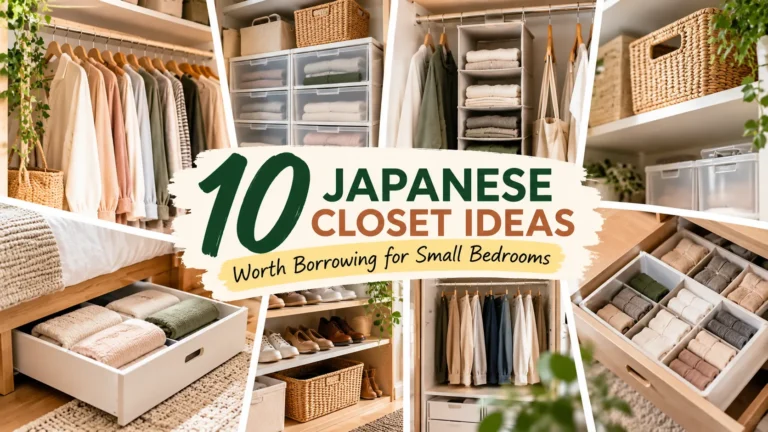

17 Renter-Friendly Storage Ideas That Leave No Damage
Renting a small home can make storage feel unnecessarily complicated. You need more places for clothes, shoes, kitchen supplies, cleaning products, and everyday clutter, but you may not be allowed to drill into walls, install shelving, or make permanent changes.
The good news is that some of the best renter friendly storage ideas do not involve the walls at all.
Instead of treating every empty wall as a place to mount something, start with unused space inside furniture, below the bed, behind doors, inside cabinets, and in awkward gaps. Then add freestanding or removable storage only where it solves a real problem.
The result can feel organized without turning your apartment into a collection of temporary-looking hacks.
A Quick Guide to Renter-Friendly Storage
| If your problem is… | Try… |
|---|---|
| No closet floor space | Hanging shelves or stackable drawers |
| Too little kitchen storage | Shelf risers or a rolling cart |
| Wasted space under furniture | Under-bed bins or low baskets |
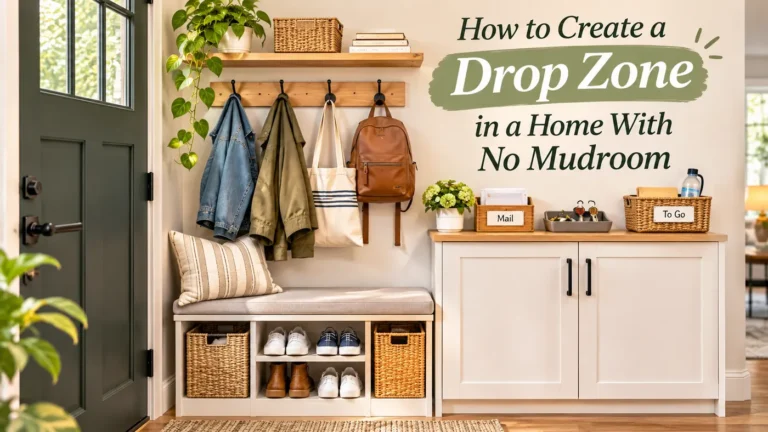
| No entryway storage | Slim freestanding rack or storage bench |
| Tiny bathroom | Over-the-door or freestanding storage |
| Awkward narrow gap | Slim rolling cart |
| Daily items have nowhere to go | A few removable hooks |
| Too much single-purpose furniture | Storage ottoman, bench, or side table |
The most useful renter friendly storage ideas solve a specific problem without creating another permanent change you will have to undo later.
You do not need all 17 ideas. Pick the few that address the places where clutter repeatedly collects.
Before You Add Storage, Know What “Renter-Friendly” Really Means
“No drilling” and “damage-free” are not always the same thing.
Even products marketed as no damage storage solutions are not automatically safe for every rental surface. Adhesive performance depends on the finish, condition of the paint, weight being supported, installation method, and correct removal.
Before adding anything:
- Check your lease if you are unsure what alterations are allowed.
- Measure the actual space instead of estimating.
- Consider the weight of what you plan to store.
- Test door and drawer clearance.
- Follow the manufacturer’s surface, load, and removal instructions.
- Prioritize solutions that can move with you to another home.
For example, 3M recommends using Command products on suitable smooth, clean surfaces and staying within the stated weight limits. The company does not recommend heavily textured surfaces, and weak, old, damaged, or insufficiently cured paint can still be affected during removal. It also instructs users to pull the removal tab slowly downward along the wall rather than away from it.
If your main challenge is mounting lightweight storage on walls without making permanent changes, our guide to no-drill wall storage for renters goes deeper into those methods.
17 Renter-Friendly Storage Ideas for a Small Home
1. Use an Over-the-Door Organizer
The back of a door is one of the easiest places to gain storage without occupying another square foot of floor.
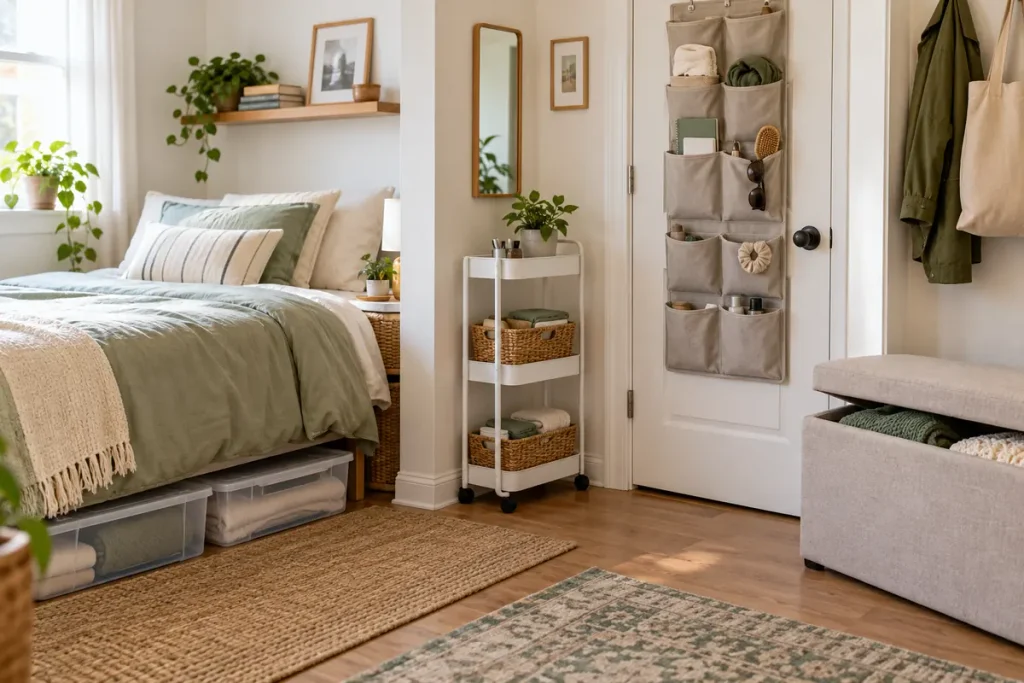
Pocket organizers can hold shoes, accessories, cleaning cloths, pantry packets, hair products, baby supplies, or small office items. Simple over-door hooks also work for robes, bags, or tomorrow’s outfit.
Check the fit before committing. Thick hooks can stop some doors from closing properly or rub against the frame.
The best setup usually gives one door one purpose. A shoe organizer filled with random toiletries, cords, gloves, receipts, and cleaning supplies quickly becomes another junk drawer, only vertical.
2. Add a Rolling Cart Where Cabinets Are Missing
A narrow rolling cart can act like a temporary cabinet in a kitchen, bathroom, bedroom, laundry area, or home office.
Use one for pantry overflow, toiletries, craft supplies, cleaning products, or work-from-home equipment. Pull it beside you when needed, then roll it back into a corner or gap afterward.
For renters, portability is the real advantage. A cart does not depend on a particular wall or room layout, so it can usually move with you when your apartment changes.
Choose a cart for a specific category instead of treating it as extra space for anything that does not have a home.
3. Turn Under-Bed Space Into Real Storage
The area under a bed can hold a surprising amount, but only if it has a clear purpose.
Low bins or zippered containers work well for seasonal clothing, spare bedding, shoes, or items you need occasionally. Avoid sliding unrelated objects underneath simply because there is room.
Measure from the floor to the lowest part of the bed frame before buying containers. Include handles, wheels, and lids in that measurement.
For frequently used items, shallow containers that pull out easily are more practical than deep boxes that require moving half the room to reach them.
4. Choose a Storage Ottoman Instead of Another Bin
In a small apartment, furniture that does two jobs is often more useful than adding another organizer.
A storage ottoman can hold blankets, games, toys, workout accessories, or living-room extras while also functioning as a footrest or occasional seat.
Imagine a living room with a basket of blankets, a toy bin, and a separate footstool. Replacing those three pieces with one storage ottoman can reduce the number of things occupying the floor without sacrificing function.
This works best when you already need the furniture piece. The goal is not to add an ottoman just because it has storage.
5. Use Freestanding Shelving Where Built-Ins Are Missing
A freestanding shelf can create substantial storage without requiring built-in cabinetry.
Use one beside a desk, inside a large closet, in a pantry-less kitchen, or along an otherwise unused wall. Baskets and boxes can make open shelving feel calmer when you are storing lots of small categories.
A freestanding piece is not automatically a no-install solution, however. The U.S. Consumer Product Safety Commission recommends securing furniture such as bookcases and dressers when appropriate to reduce tip-over risks.
If the unit you are considering requires anchoring and your lease restricts wall attachments, choose a lower and more stable alternative or ask your landlord before installation.
Renter-friendly storage should never come at the expense of safety.
6. Double Cabinet Space With Shelf Risers
Many kitchen and bathroom cabinets waste space vertically. Plates or bottles occupy the bottom portion of the shelf while several inches above them remain empty.
A freestanding shelf riser creates another level without modifying the cabinet.
Use risers for mugs above plates, small food containers, toiletries, or lightweight pantry goods. Since nothing is permanently installed, you can rearrange them whenever your storage needs change.
This is one of the simplest apartment storage ideas because it improves storage you already pay for before adding anything else to the room.
7. Add Hanging Shelves to a Closet Rod
If a rental closet gives you one rod and one shelf, hanging fabric or lightweight shelving can create compartments for sweaters, jeans, accessories, or shoes.
It is particularly useful when you have more folded clothing than hanging clothing.
Before adding one, look at what is currently occupying the rod. If half the clothes could be folded and moved into hanging shelves, you may gain useful storage without adding a dresser.
Do not load the organizer beyond what the closet rod can safely support, and leave enough breathing room to see what you own.
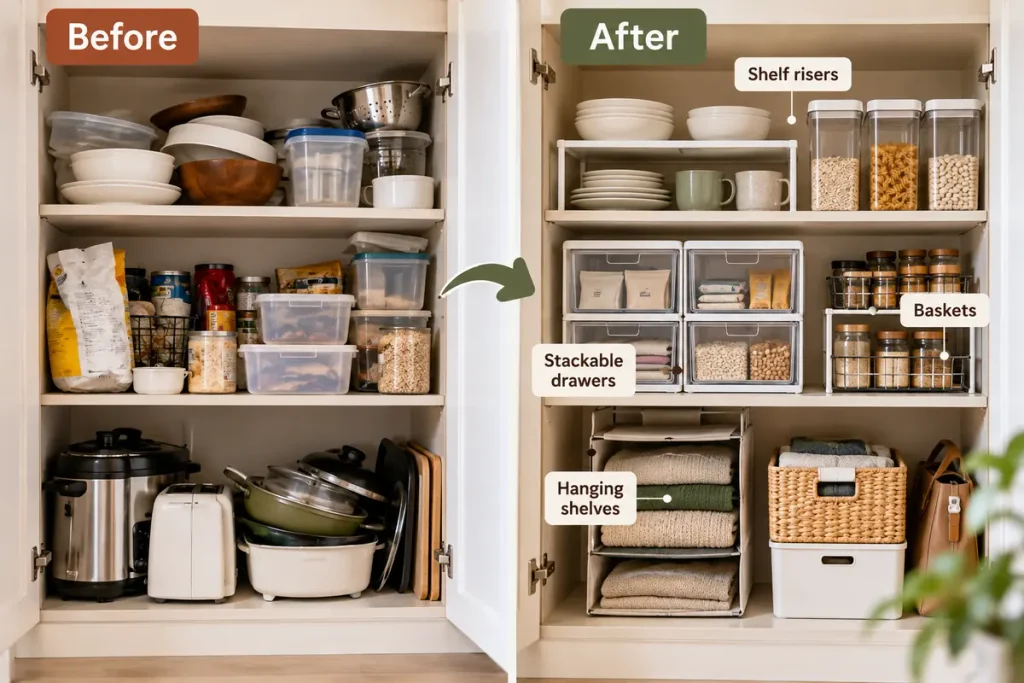
Before adding more furniture, use shelf risers, drawers, baskets, and hanging organizers to make existing storage work harder8. Use Tension Rods Inside Existing Storage
Tension rods can create temporary structure inside spaces you already have.
A small rod beneath a sink can hold lightweight spray bottles. A suitable rod inside a closet or alcove may create an additional hanging zone when the product is designed for that purpose.
They work best between two stable surfaces with enough grip to stay in place.
If a rod keeps slipping, do not automatically solve the problem by tightening it as hard as possible. Excess pressure can mark some painted or finished surfaces, while excessive weight can make the rod fall.
Use tension storage where the space naturally supports it rather than forcing it into every available gap.
9. Add Removable Hooks for Lightweight Daily Items
Among renter friendly storage ideas, removable hooks are especially useful for the small everyday items that repeatedly land on counters, chairs, or floors.
Think keys, lightweight accessories, measuring spoons, small cleaning tools, or an empty reusable bag.
Keep the load light and follow the manufacturer’s surface and weight instructions. Adhesive hooks should not be treated as substitutes for permanent hardware.
Also consider visual clutter. Three useful hooks near an entry can make a routine easier. Fifteen hooks covered with bags, hats, cords, and miscellaneous items can make a small room feel more crowded even when everything is technically off the floor.
10. Use Magnetic Storage on Suitable Metal Surfaces
If your refrigerator, washer, metal cabinet, or another surface accepts magnets, magnetic organizers can create storage without adhesive or drilling.
A magnetic basket beside a refrigerator might hold lightweight kitchen items. Magnetic hooks can keep oven mitts or small tools close to where you use them.
Test the surface first because not every appliance front is magnetic.
Keep organizers away from ventilation openings, controls, labels, or areas that become hot. A storage solution is only useful if it does not interfere with the appliance itself.
11. Slide a Narrow Cart Into an Awkward Gap
Those strange six-inch or eight-inch gaps beside furniture and appliances can sometimes become useful storage without adding much visual bulk.
A slim cart might fit beside a refrigerator, vanity, desk, washer, or dresser.
This is particularly helpful when you need storage ideas without drilling but already feel that every obvious area of the apartment is full.
Measure the narrowest part of the gap, not only the opening. Baseboards, hinges, appliance handles, drawer fronts, and uneven walls can reduce the usable width.
A small rolling cart holding laundry supplies in a gap beside the washer can be far more functional than adding another cabinet somewhere else in the room.
12. Add Baskets Under Open Furniture
Before buying another cabinet, check underneath the furniture you already own.
A console table with six inches of empty space underneath may look fully occupied at first glance, but two shallow baskets can turn that unused area into storage for workout gear, extra linens, or everyday accessories.
The same idea works beneath benches, coffee tables, desks, and some nightstands.
Choose baskets that visually fit the furniture rather than squeezing in the largest containers that will physically fit. A little open space around them usually looks calmer.
Use each basket for something that naturally belongs in that room so you do not create another place where unrelated clutter accumulates.
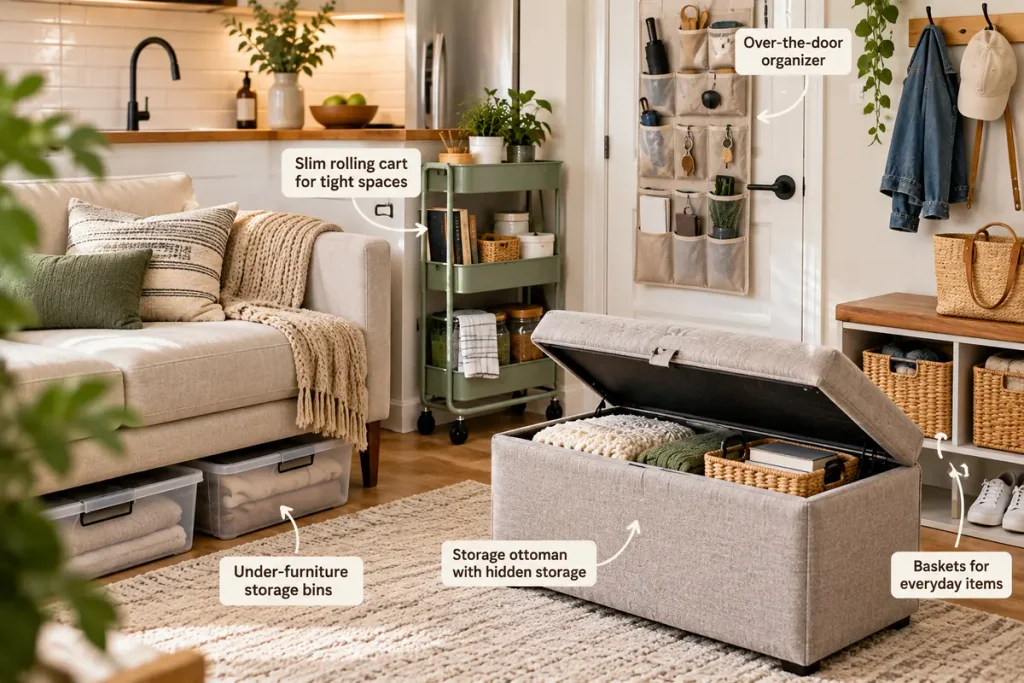
Use awkward gaps, door backs, under-furniture space, and multipurpose furniture to add storage without permanent changes13. Use Stackable Drawers Inside Cabinets and Closets
A deep shelf often looks spacious but functions poorly because everything forms one large pile.
Small freestanding drawers can divide that volume into usable layers.
They are helpful for underwear, accessories, toiletries, craft supplies, cleaning cloths, or small pantry goods. Clear fronts work well when you frequently forget what is inside. Opaque drawers can reduce visual clutter in open storage.
Before buying several matching units, test one in the space. Make sure the drawer can open fully without hitting a hinge, door frame, shelf lip, or plumbing.
14. Put a Freestanding Rack Over the Toilet
If your bathroom has no cabinets, the area above and around the toilet may offer useful vertical space.
A freestanding over-toilet unit can provide shelves for extra towels, toilet paper, or closed baskets without requiring wall-mounted shelving.
Measure carefully around the toilet tank, supply line, baseboard, and any nearby controls.
Keep heavier items lower and frequently used items within comfortable reach. The top shelf does not need to be filled simply because it exists.
This works particularly well when the bathroom lacks floor storage but still has open height above existing fixtures.
15. Use the Back of Cabinet Doors Carefully
Cabinet doors can provide extra storage, but renters should be selective about what they place there.
Over-cabinet baskets and hooks require no adhesive and can work for dish towels, cleaning gloves, lightweight cutting boards, or small supplies.
Picture an under-sink cabinet with cleaning gloves lying on top of bottles. An over-door hook can give the gloves a permanent place without taking away shelf space.
Before using one, close the door slowly.
Check whether the organizer rubs against the cabinet face, hits an interior shelf, catches on plumbing, or prevents the door from closing correctly. A clever organizer is not useful if it damages the cabinet every time you open it.
16. Use Vertical Space Without Filling Every Wall
Vertical storage can be helpful in rentals, especially when floor space is limited, but the goal is not to cover every available wall.
Look first for vertical opportunities that do not require major installation. A tall but appropriately stable freestanding unit, over-door organizer, narrow shelving unit, or existing furniture with unused height can often provide more capacity.
If your apartment has very little floor space, our guide to vertical storage ideas for renters covers this strategy in more detail.
One or two intentional vertical storage zones usually work better than scattering small organizers across every wall. Keeping some empty wall area visible can also make a compact room feel calmer.
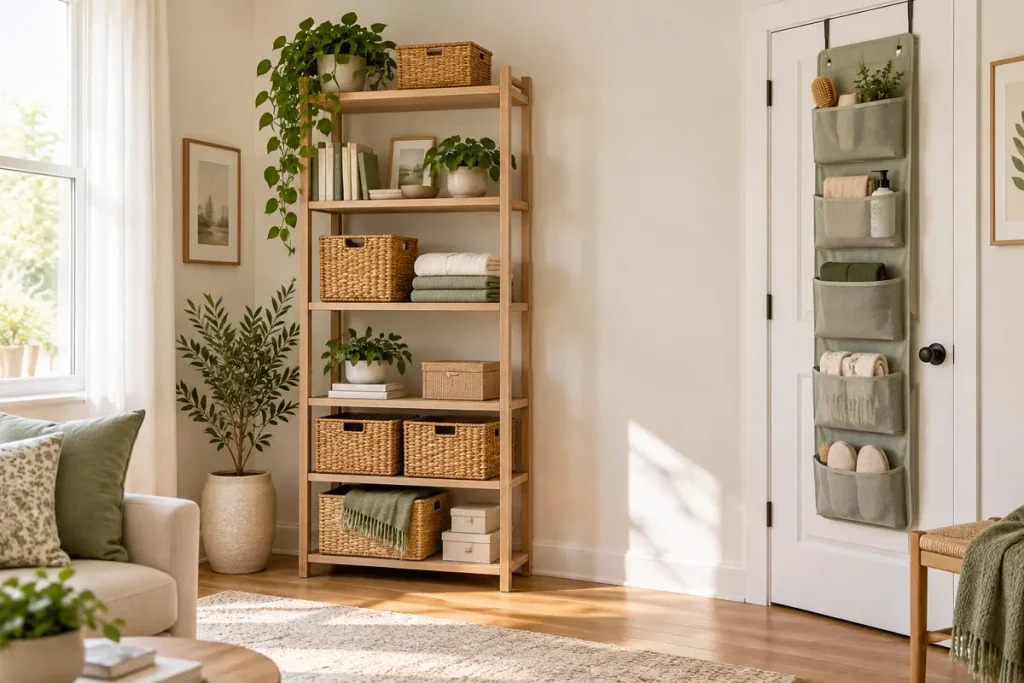
Vertical storage works best when it adds useful capacity without covering every available wall17. Replace Single-Purpose Furniture With Storage Furniture
Sometimes the best storage addition is not an organizer at all.
Look at the furniture already taking up space and ask whether one piece could do more.
A coffee table with drawers can replace a table plus baskets. A bed with built-in drawers may reduce the need for another piece of furniture. A storage bench can hold shoes while providing a place to sit. A nightstand with drawers generally offers more useful storage than a decorative open table.
Consider a small entryway with a chair for putting on shoes and a separate basket for storing them. A compact storage bench could perform both jobs while taking up roughly the same area.
For a small rental, that distinction matters. Increasing storage capacity does not always require adding more physical objects.
How to Choose Renter-Friendly Storage Ideas
When you need more storage, work through the space in this order.
1. Improve the storage you already have.
Start with cabinets, closets, drawers, and shelves. Shelf risers, drawer dividers, and better category placement may solve the problem without adding furniture.
2. Look for hidden or underused space.
Check under beds, benches, desks, tables, and other existing furniture.
3. Use doors and interior surfaces.
The backs of doors and cabinet interiors can add capacity without occupying another part of the room.
4. Add movable or multipurpose storage.
Rolling carts, ottomans, benches, and freestanding storage can usually adapt to another room or another home.
5. Add removable mounted solutions only where they make sense.
Hooks, tension systems, and similar products are useful for specific lightweight problems. They do not need to become the foundation of the entire organization system.
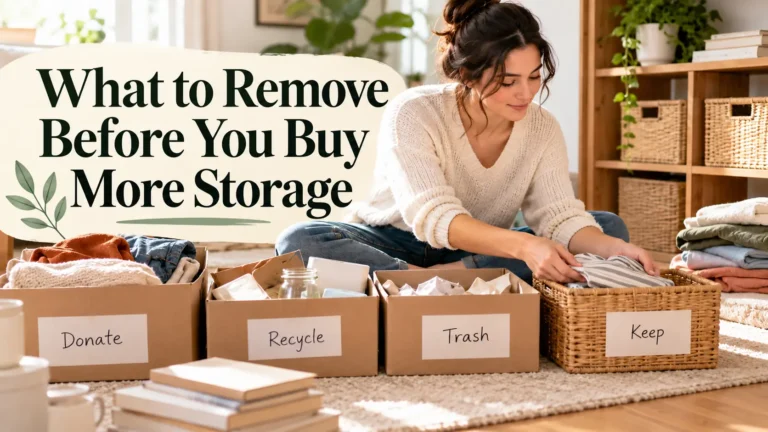
Following this order can prevent a common small-apartment problem: buying so many organizers that the storage products themselves start making the home feel crowded.
What Not to Do Just to Avoid Drilling
A storage solution is not automatically good simply because it does not require a drill.
- Do not overload adhesive storage. Removable hooks still have stated load limits. Use them for the categories they were designed to support.
- Do not assume every surface is adhesive-friendly. Paint condition, texture, moisture, finish, and installation method can all affect how a removable product performs.
- Do not over-tighten tension products. More pressure is not always better, particularly against painted walls, cabinet interiors, or delicate finishes.
- Do not leave furniture unstable just to avoid anchoring it. Follow the manufacturer’s safety instructions. If a piece requires installation that your rental does not allow, choose another design or speak with your landlord.
- Do not block circulation. A narrow apartment does not become more functional when every empty edge contains a cart, shelf, or rack. Protect walking paths and door clearance.
- Do not buy organizers before measuring. One inch can determine whether an organizer fits beautifully or becomes something you have to return.
Choose Storage That Can Move With You
The best rental friendly organization is not dependent on one exact apartment layout.
A rolling cart can hold pantry supplies today and office supplies after your next move. Shelf risers can work in a kitchen, bathroom, or closet. Under-bed containers can later move onto a closet shelf. A storage ottoman can shift from a bedroom to a living room.
That flexibility matters because rentals change.
The best renter friendly storage ideas solve a recurring problem now while remaining useful in the next home.
Instead of trying to recreate permanent built-ins with temporary products, focus on storage that is portable, adaptable, and appropriate for the space you already have. Start with the storage hiding inside your apartment, then add only what makes daily life easier.