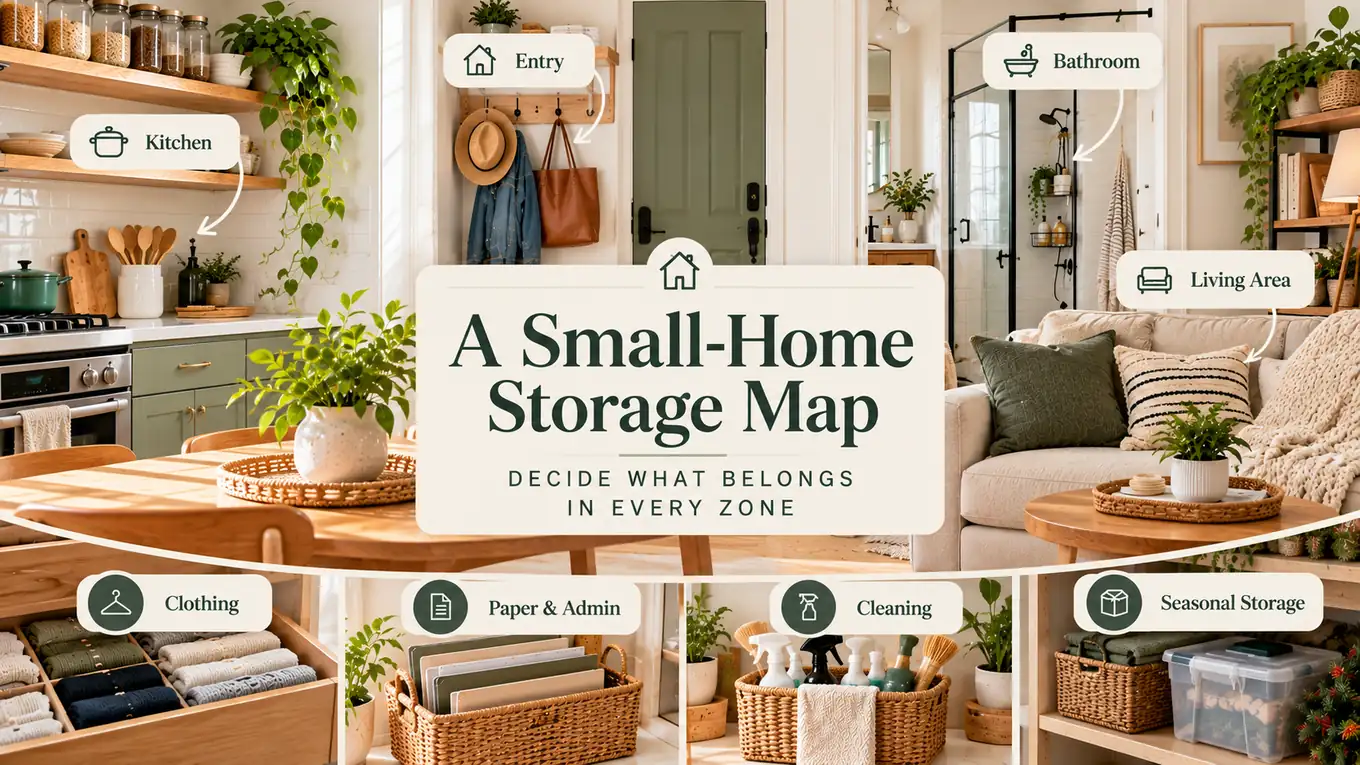
A Small-Home Storage Map: Decide What Belongs in Every Zone
A small home can have plenty of shelves, cabinets, and baskets yet still feel frustrating to use.
Everyday items get buried behind things you rarely need. Backups take over convenient shelves. Belongings end up scattered across different rooms because no one has decided where they should live.
A small home storage plan helps you make those decisions before buying more organizers. By assigning each category a logical home and matching storage locations to how often you use them, you can make limited space work more efficiently.
Here’s how to create a storage map that fits your home and everyday routines.
Start With a Storage Map, Not More Storage Containers
A storage map is a simple plan showing where different categories of belongings should live.
Instead of organizing one cabinet at a time, you look at the entire home and assign storage according to activities, accessibility, and frequency of use.
For example, a drawer beside the stove is more valuable for everyday cooking utensils than holiday serving pieces. A bathroom shelf within easy reach should hold daily essentials rather than unopened backups.
The question isn’t simply “Can this fit here?”
It’s “Does this item deserve this location?”
That’s the foundation of an effective small-home organization system.
The 3 Levels of Storage in a Small Home
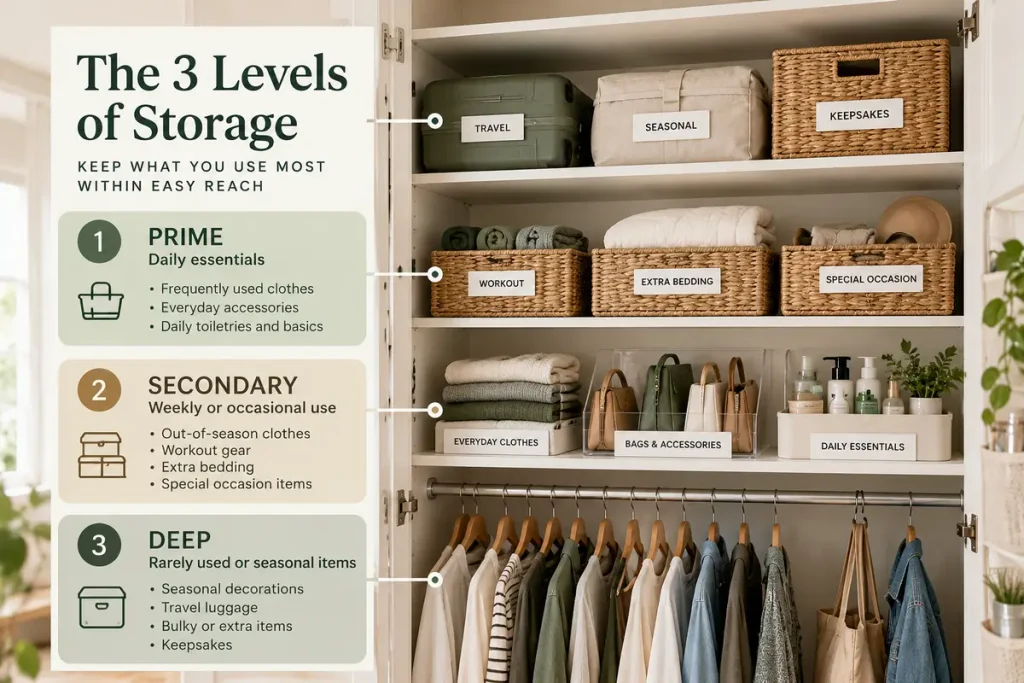
Before assigning storage zones, divide your available space into three levels.
Prime Storage: Things You Use Every Day
Prime storage includes your easiest-to-reach locations:
- Eye-level shelves and accessible drawers
- Hooks near the entryway
- Front sections of cabinets
- Bedside storage
- Frequently accessed bathroom shelves
Reserve these spaces for daily essentials such as keys, toiletries, everyday cookware, and current-season clothing.
Secondary Storage: Things You Use Occasionally
Secondary storage includes slightly less convenient locations, such as lower shelves, deeper drawers, and higher cabinet shelves.
These spots work well for extra towels, baking equipment, hobby supplies, and household tools.
You should still be able to retrieve these items without dismantling your storage system.
Deep Storage: Things You Rarely Need
Deep storage includes under-bed containers, top closet shelves, high cabinets, and other harder-to-reach spaces.
Use these locations for seasonal decorations, luggage, off-season clothing, and rarely used belongings.
Keep containers labeled and avoid stacking heavy items overhead.
Quick Storage-Level Guide
| Storage Level | Frequency | Examples |
|---|---|---|
| Prime | Daily or nearly daily | Keys, toiletries, cookware, chargers |
| Secondary | Weekly or occasionally | Extra towels, baking tools, hobby supplies |
| Deep | Seasonal or rarely | Luggage, holiday decorations, off-season clothes |
The goal isn’t to make everything easy to reach. It’s to give the most convenient space to the things you actually use most.
Map Your Home Into Functional Storage Zones
The next step in your small home storage plan is dividing your home into functional zones.
A zone doesn’t need its own room. In a studio apartment, several activities may share one space while still having separate storage locations.
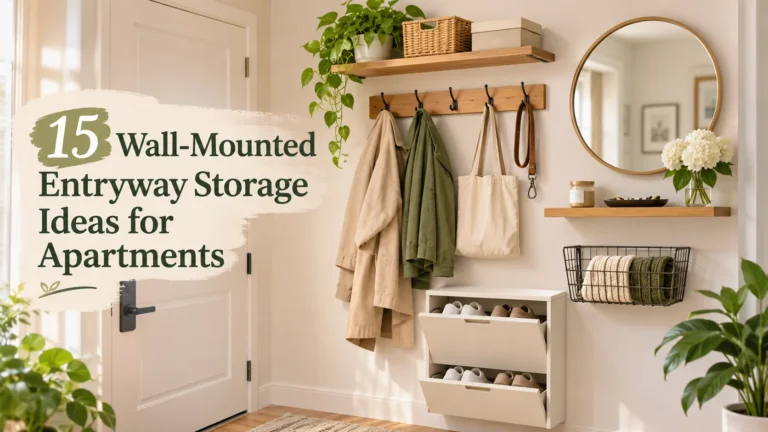
Zone 1: Entry and Exit
Your entryway should support leaving and arriving without becoming a collection point for everything you own.
Prime: Keys, everyday shoes, current bags, frequently worn jackets.
Secondary: Umbrellas, reusable shopping bags, occasional accessories.
Deep: Off-season shoes, extra coats, travel bags.
Keep only items currently in rotation near the door. Everything else can live elsewhere.
Zone 2: Food and Cooking
Kitchen storage should follow your cooking routine.
Prime: Everyday dishes, cookware, utensils, oils, and frequently used pantry staples.
Secondary: Baking supplies, food containers, specialty cookware, occasional appliances.
Deep: Holiday dishes, rarely used appliances, oversized serving pieces.
Keep items near where they’re used whenever possible. For example, everyday cooking utensils belong near the stove, while baking equipment can occupy less accessible cabinets.
If cabinet space is especially limited, our guide to organizing a kitchen without a pantry offers more room-specific solutions.
Zone 3: Bathroom and Personal Care
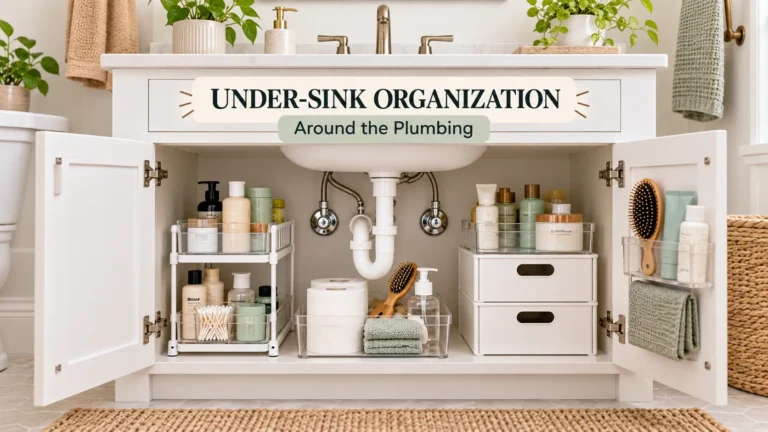
Bathroom storage is often limited, so prioritize products you actually use there.
Prime: Toothbrushes, daily skincare, frequently used toiletries.
Secondary: Extra towels, styling tools, weekly treatments.
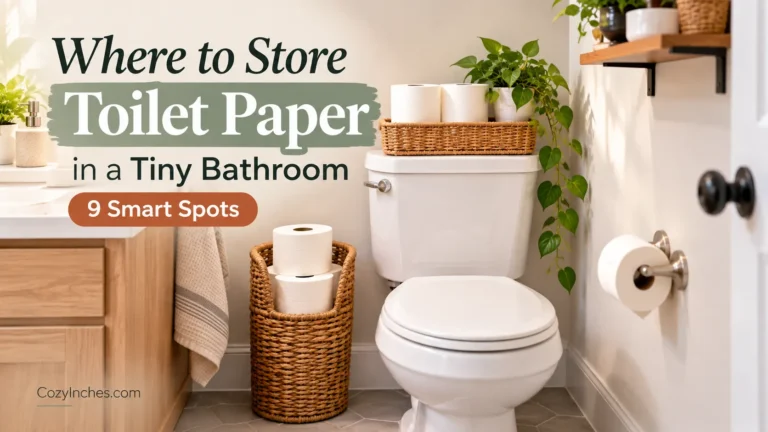
Deep: Bulk refills, guest toiletries, unopened backups.
Not every backup needs to remain in the bathroom. Moving excess supplies elsewhere can free valuable space for daily routines.
For particularly tight spaces, see our tips for organizing a bathroom with no built-in storage.
Zone 4: Clothing and Getting Ready
Organize clothing around what you’re currently wearing rather than your entire wardrobe.
Prime: Current-season clothes, underwear, sleepwear, everyday shoes.
Secondary: Occasion clothing, accessories, less frequently worn items.
Deep: Off-season clothing, sentimental pieces, travel accessories.
A small closet becomes easier to manage when everyday clothing isn’t competing with items worn only a few times a year.
Zone 5: Living and Everyday Activities
Living rooms often serve several purposes, including relaxing, working, reading, and playing.
Prime: Remotes, chargers, current books, frequently used toys.
Secondary: Board games, hobby supplies, extra blankets.
Deep: Seasonal decorations, memorabilia, archived media.
Choose storage based on the activities happening in the room.
For example, if children play in the living room every afternoon, their most-used toys need an accessible home rather than a container hidden in another room.
Keep visible storage intentional. Open shelves don’t need to display everything you own. If they begin to feel crowded, consider whether some items belong in closed storage instead. Small changes inspired by retail displays can also help make open storage feel calmer.

Zone 6: Cleaning and Household Maintenance
Cleaning products can easily become scattered throughout a small home.
Prime: Frequently used cleaners, cloths, broom, vacuum.
Secondary: Specialty cleaning products, batteries, light bulbs, small repair tools.
Deep: Bulk refills and rarely used maintenance supplies.
Consider one main household-maintenance zone, with small task-specific supplies stored where needed.
For safety, keep household chemicals in appropriate original containers, away from children and pets, and separate from food and personal-care products.
Zone 7: Paper, Documents, and Household Admin
Paper clutter grows quickly when incoming documents don’t have a clear destination.
Prime: Current mail, bills requiring action, active paperwork.
Secondary: Household reference documents, manuals you regularly consult.
Deep: Important long-term records and archived documents.
Separate paperwork that needs attention from documents you’re keeping for reference.
A small tray or folder for current paperwork can prevent an entire countertop from becoming a temporary filing system.
Zone 8: Seasonal and Long-Term Storage
This zone holds belongings you need to keep but rarely use.
Examples include holiday decorations, luggage, guest bedding, seasonal equipment, and sentimental items.
Choose accessible storage for anything currently in season, and move the rest to labeled containers in less convenient locations.
Avoid treating deep storage as a permanent hiding place for items you no longer need.
Your Whole-Home Storage Map at a Glance
Use this quick-reference table to decide where things belong in a small home.
| Zone | Prime Storage | Secondary Storage | Deep Storage |
|---|---|---|---|
| Entryway | Keys, current shoes, daily bags | Umbrellas, reusable bags | Off-season coats and shoes |
| Kitchen | Daily cookware, food staples | Baking tools, occasional appliances | Holiday dishes |
| Bathroom | Daily toiletries | Extra towels, styling tools | Bulk backups |
| Bedroom | Current-season clothing | Occasion wear, accessories | Off-season clothes |
| Living Area | Remotes, chargers, current toys | Games, hobbies, extra blankets | Seasonal decor |
| Cleaning | Everyday cleaning tools | Specialty supplies | Bulk refills |
| Paper/Admin | Active paperwork | Reference documents | Long-term records |
| Seasonal | Currently needed items | Occasionally used equipment | Out-of-season belongings |
Think of this as a starting point, not a fixed rule.
Your storage zones should reflect your household’s actual routines, available space, and accessibility needs.
What If an Item Could Belong in Two Zones?
Some belongings don’t have one obvious home.
A phone charger could belong in the bedroom, living room, or office. Reusable shopping bags might fit naturally in the kitchen or entryway.
Use one simple rule:
Store an item closest to where you actually use or need it.
If you charge your phone beside the bed every night, keep the charger there. If you always grab shopping bags on your way out, store them near the door.
Intentional duplicates can also make sense. Keeping a cleaning cloth in both the kitchen and bathroom may be more practical than carrying one back and forth.
The goal is convenience without unnecessary duplication.
What If a Storage Zone Is Already Full?
A full cabinet doesn’t automatically mean you need another shelf or basket.
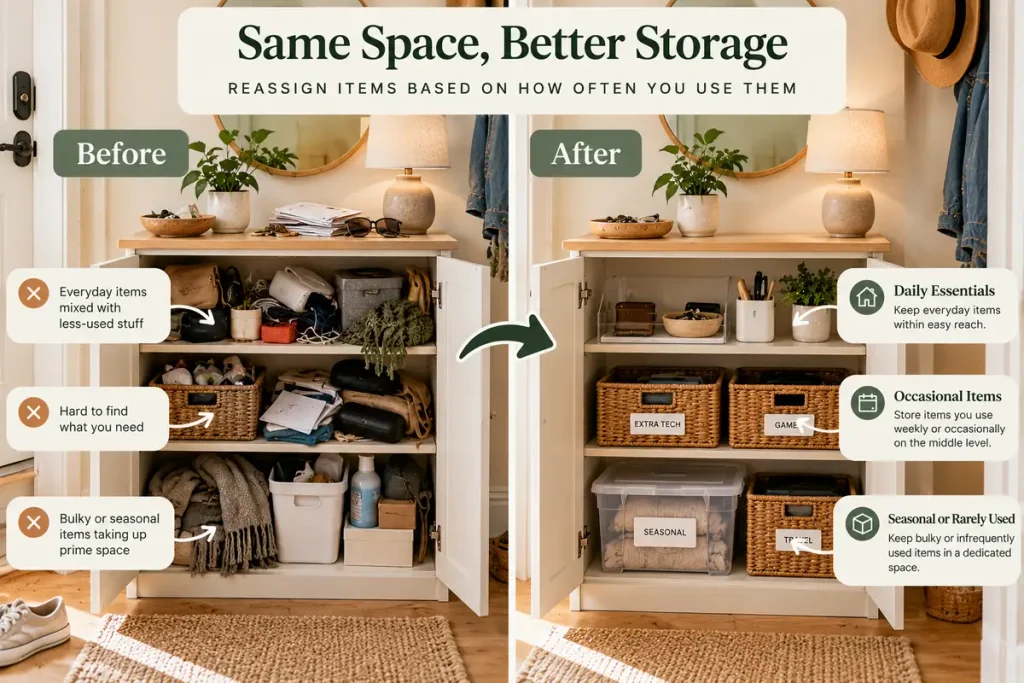
First, check whether rarely used items are occupying prime storage. Move those items to secondary or deep storage when appropriate.
Next, review how much you’re keeping. If a category has grown beyond its assigned space, consider whether everything still needs to stay.
Only look for additional storage after you’ve addressed misplaced items and unnecessary duplicates.
A good storage map should help you manage belongings, not simply find more places to hide them.
5 Signs Your Storage Map Needs to Change
Even a neatly organized home can have an inconvenient storage system.
1. Things Never Return to Their Assigned Places
If keys always end up on the kitchen counter instead of their designated drawer, that drawer may be too inconvenient.
2. You Move Several Things to Reach One Everyday Item
Daily essentials shouldn’t require constant rearranging. Move frequently used items toward the front or into more accessible storage.
3. One Category Is Scattered Everywhere
When batteries, paperwork, or cleaning supplies have no clear home, duplicates and misplaced items become harder to track.
4. Rarely Used Items Occupy Your Best Storage
Holiday decorations and unopened backups shouldn’t displace everyday belongings from convenient shelves.
5. New Organizers Never Seem to Solve the Problem
Containers help organize space, but they can’t fix unclear storage assignments. Reconsider what belongs where before purchasing more.
Build Your Small Home Storage Plan in 20 Minutes
You don’t need to empty every closet or reorganize the entire house in one afternoon.
Start with a quick storage audit.
Step 1: Walk Through Your Home
Identify your existing cabinets, drawers, shelves, closets, hooks, and other storage locations.
Step 2: Mark Your Prime Storage
Notice which locations are easiest to reach during everyday activities.
Step 3: Identify Misplaced Items
Look for rarely used belongings occupying convenient storage.
Step 4: Assign Categories to Functional Zones
Decide where clothing, cleaning products, paperwork, toiletries, and other categories primarily belong.
Step 5: Move Items According to Frequency of Use
Give daily essentials priority, move occasional items farther away, and reserve deep storage for rarely used belongings.
Step 6: Test Before Buying Organizers
Try your new arrangement for a week or two.
If certain items repeatedly end up outside their assigned homes, reconsider their locations.
Once the system works, measure the available space before purchasing any additional organizers.
The 20-minute exercise is for creating your initial map. Moving everything into place can happen gradually.
A Small Home Needs Clearer Decisions, Not More Storage
An effective small home storage plan isn’t about squeezing more belongings into every available inch.
It’s about making everyday life easier.
Give convenient storage to the things you use most, move occasional belongings farther away, and assign each category a logical home.
When your storage zones match the way you actually live, even a small home can feel more organized and easier to maintain.