How to Organize a Small Bathroom With No Storage (Without Clutter)
A tiny bathroom with a pedestal sink, no medicine cabinet, and barely enough room for a towel can feel impossible to organize. Where do you put your toothbrush, toiletries, cleaning supplies, and extra toilet paper when there are no drawers or cabinets?
The solution isn’t to squeeze in as many organizers as possible. It’s to reduce what the bathroom needs to hold, find a few useful storage spots, and give everyday items a place that’s easy to reach.
Here’s how to organize a small bathroom with no storage without crowding the room or buying more organizers than you need.
Start With What Actually Needs to Stay in the Bathroom
Before looking for more storage, figure out what deserves space in the bathroom.
Take a quick inventory of everything currently sitting on the sink, shower floor, toilet tank, or any available ledge. Then separate those items into three groups:
- Daily essentials: Toothbrushes, toothpaste, face wash, deodorant, and current shower products.
- Occasional items: Hair tools, grooming supplies, and products used once or twice a week.
- Backups and extras: Unopened toiletries, spare towels, extra toilet paper, and bulk supplies.
Daily essentials should stay close to where you use them. Occasional items can go in secondary storage, while most backups can live elsewhere in the home.
You don’t need to empty the entire bathroom to get started. Work through one surface or product category at a time, especially if there’s nowhere to spread everything out.
A Quick Storage Plan for a Bathroom With No Cabinets
| What You Need to Store | Where to Put It |
|---|---|
| Toothbrush and daily skincare | Small sink tray or shallow shelf |
| Shampoo and body wash | Shower caddy |
| Towels currently in use | Door or wall hooks |
| Toilet paper | Compact holder or small basket |
| Hair and grooming supplies | Portable categorized basket |
| Cleaning supplies | Secure, designated storage |
| Extra toiletries and spare towels | Storage outside the bathroom |
This is a starting point, not a shopping list. Use the storage you already have before adding anything new.
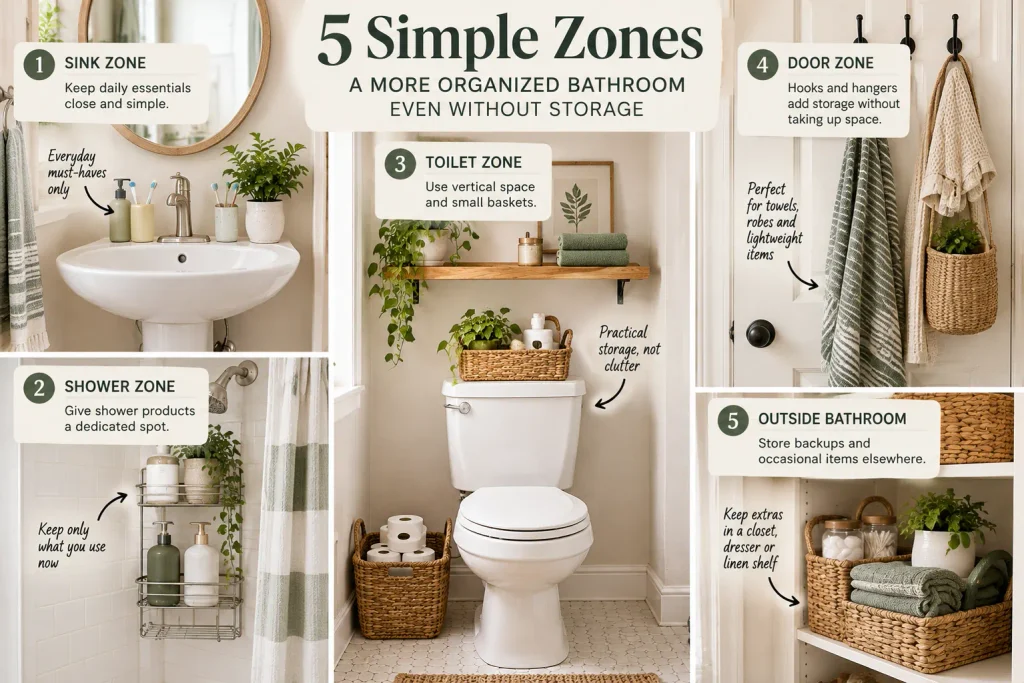
Find Storage Space Without Adding Cabinets
Even a bathroom with no built-in storage may have a few overlooked areas that can hold everyday necessities.
Start with the surfaces that won’t interfere with walking, opening doors, or using fixtures.
Check the Space Above the Toilet
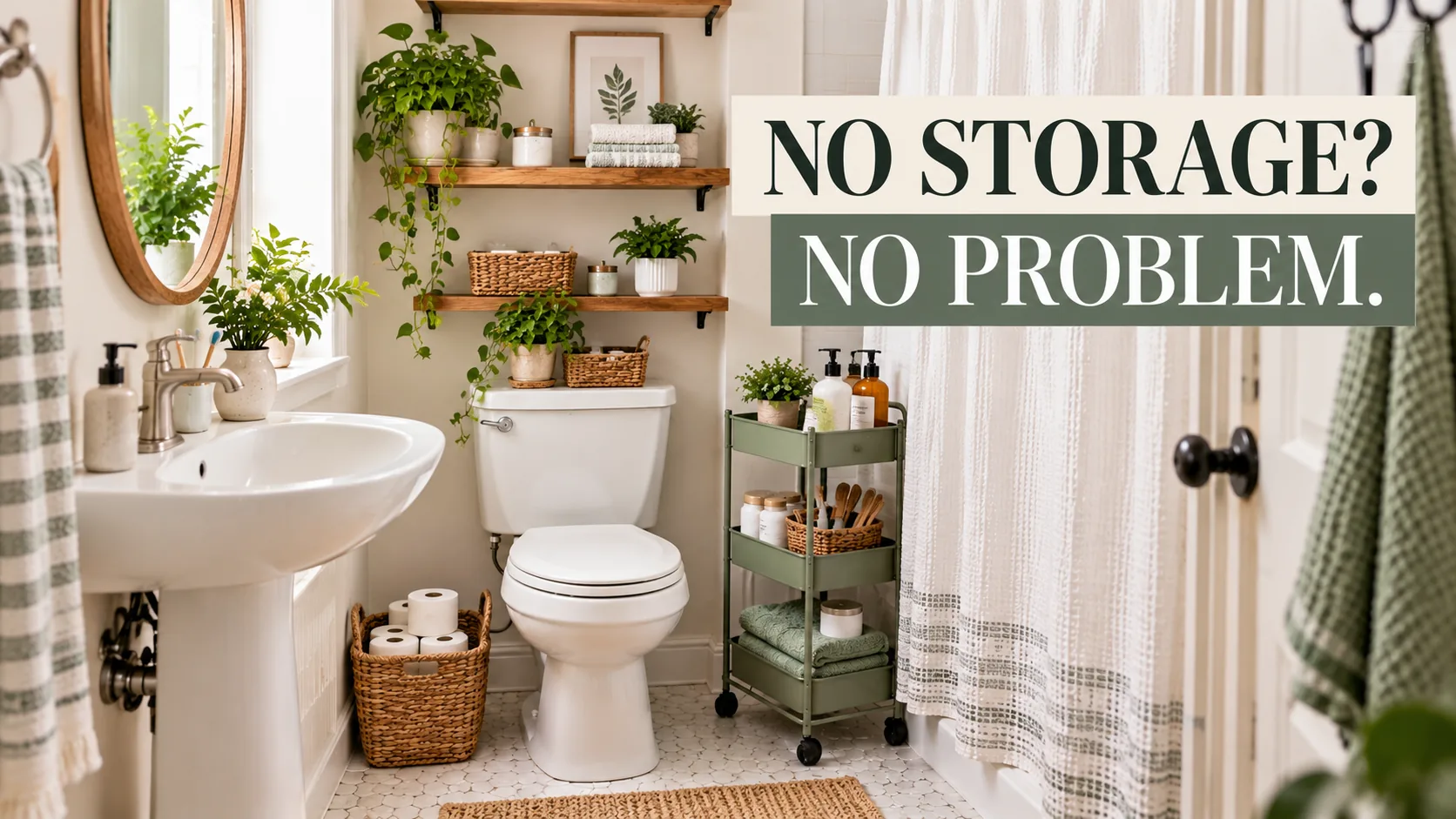
The wall above the toilet may have room for one shallow shelf or a compact wall-mounted unit.
Use it for a few lightweight supplies rather than turning it into a crowded display of bottles and baskets.
Before adding anything, check the available depth and make sure the storage won’t interfere with comfortable toilet use.
If that wall is too narrow, already occupied, or unsuitable for mounting, skip it. Not every bathroom needs over-the-toilet storage.
Make the Bathroom Door Useful
A door can sometimes hold towels, robes, or lightweight hanging storage without taking up floor space.
Over-the-door hooks are especially practical when the bathroom has no towel bar.
Check the gap above the door and make sure the organizer doesn’t prevent it from closing or hit nearby fixtures.
Avoid hanging so much weight that the door becomes difficult to operate.
Use Narrow Wall Space Selectively
A small section of wall beside the sink or mirror might accommodate a toothbrush holder, hook, or shallow shelf.
Choose a spot based on what you need to access there.
For example, a small holder beside the sink is useful for toothbrushes, but a shelf across the room may be inconvenient for the same items.
You don’t need to fill every empty wall. One well-placed storage spot is more useful than several that make the room feel busy.
Create a Daily-Use Zone Around the Sink
A bathroom without a vanity needs a simple system for the products used at the sink.
The goal is to keep essentials accessible without letting them spread across every available surface.
Keep the Sink Area Limited to Daily Essentials
Start with your toothbrush, toothpaste, face wash, and a few products you use every day.
If there’s enough room, group them on a small tray or in a compact holder. If the sink has no usable ledge, consider a nearby shallow shelf or portable container.
Avoid storing occasional products here simply because there’s nowhere else to put them.
If your bathroom does have a small vanity, our guide to organizing under the bathroom sink around the plumbing covers that separate storage problem in more detail.
Group Products by Routine
Instead of arranging every bottle individually, group products that you use together.
For example, a small morning skincare basket might hold cleanser, moisturizer, and sunscreen. A separate grooming basket could contain items used less frequently.
This works particularly well when you have no drawers.
Keep each group small enough to lift and return easily. A basket that requires digging through fifteen products isn’t making your routine much simpler.
For a bathroom with an actual counter, see our guide to small bathroom counter organization for daily routines.
Give Shower Products One Dedicated Spot
Shampoo, conditioner, body wash, and other shower products should have their own home rather than competing with sink essentials.
If your shower has no built-in shelf, a suitable shower caddy can keep currently used products off the floor.
Choose a location that doesn’t obstruct movement or the shower controls. Look for materials that tolerate moisture and allow water to drain.
Only keep the bottles you’re actively using in the shower.
There’s no need to store unopened refills beside your shampoo when they could be kept somewhere drier.
Use Portable Baskets When You Have No Drawers
Not every bathroom has enough wall space for shelves or enough floor space for a storage cabinet.
Portable baskets offer another option because they don’t have to remain in the bathroom.
Give each basket a specific purpose, such as skincare, hair accessories, or grooming supplies.
Then decide whether that category needs to stay in the bathroom at all.
For example, a basket of occasional hair products could live in a bedroom closet and be carried into the bathroom when needed.
Avoid using one oversized basket for everything. Smaller, clearly defined groups are easier to maintain and help prevent supplies from becoming a jumble.
Add One Slim Storage Piece Only If You Need It
After assigning the available storage spots, check whether any essential items still lack a practical home.
If they do, consider adding one compact freestanding piece.
A narrow rolling cart or slim shelving unit may work beside a sink or in an unused corner. Choose the type based on the available footprint and the items it needs to hold.
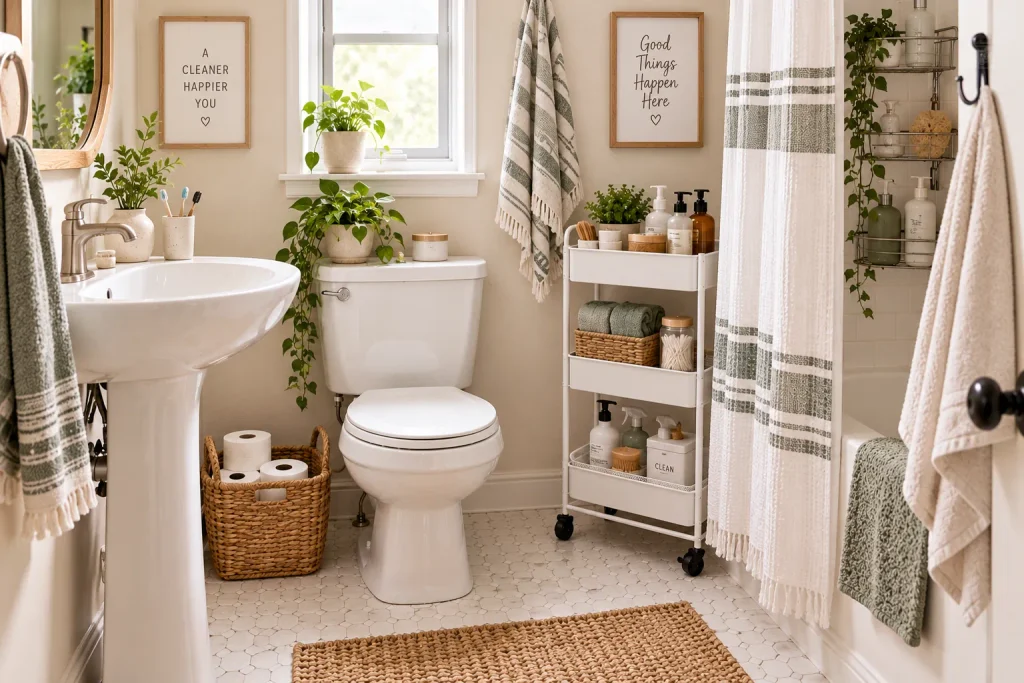
Before buying, measure the width and depth of the space, including room for opening the door and moving comfortably around fixtures.
Also check whether the unit can be cleaned around easily and whether it is suitable for a humid environment.
Tall or top-heavy furniture may need anchoring according to the manufacturer’s instructions. If you cannot anchor it safely, choose a more stable alternative.
What If You Can’t Drill or Use Wall Storage?
You can still organize the bathroom without installing shelves or hooks.
Keep a small portable basket for sink essentials, use a stable freestanding organizer only where space allows, and store occasional items outside the room.
For towels, use an existing towel bar or a suitable over-the-door option if the door allows it.
If even a slim cart blocks movement, don’t force one into the room. A portable system may be the better choice.
For more installation-specific options, see renter-friendly bathroom storage ideas with no drilling.
Move Backup Supplies Somewhere Else
A small bathroom doesn’t have to store every product used by the household.
Keep a reasonable amount of toilet paper, soap, and other essentials nearby, then move unopened refills and bulk supplies to a designated location elsewhere.
A bedroom closet, hallway cabinet, or dresser drawer may provide more suitable storage.
This also makes it easier to see when something actually needs replacing.
Instead of keeping several backup shampoos in the shower, store them together outside the bathroom and bring in a replacement when the current bottle runs out.
Extra towels can follow the same approach. Keep the towels currently in use accessible and find another home for spare sets.
If towels are your main storage challenge, our guide to towel storage ideas for a bathroom with no linen closet explores that problem separately.
One important exception is medication. Don’t assume a bathroom is a suitable place to store it. Follow the product’s storage instructions, since heat and humidity can affect some medicines.
Cleaning products should also be kept according to their labels, in secure locations away from children and pets.
Example: Organizing a Bathroom With No Cabinets
Imagine a bathroom with a pedestal sink, a small shower, no medicine cabinet, and no linen closet.
There’s no obvious place to put everyday supplies, but the room still needs to function.
Here’s one possible setup.
| Zone | Simple Organization Solution |
|---|---|
| Sink | One small holder for toothbrushes and daily toiletries |
| Shower | One caddy for currently used products |
| Toilet | Compact toilet paper holder |
| Door | Hooks for towels and robes |
| Outside bathroom | Portable baskets for occasional items and backups |
If the bathroom has a suitable narrow gap, a slim freestanding unit could provide additional storage. If not, the system can work without one.
The important part is that each category has a logical home.
You don’t need a large cabinet or a collection of matching organizers to make the bathroom functional.
Small Bathroom Storage Mistakes to Avoid
A few common mistakes can make an already small bathroom feel more crowded.
Adding storage before reducing clutter. More shelves won’t solve the problem if you’re keeping too many products in the room.
Choosing furniture based only on dimensions. A cart may technically fit but still block the door, toilet, or walkway.
Using too many open organizers. Several baskets and shelves can create visual clutter, especially when every container is full.
Storing everything where it’s visible. Daily essentials need easy access, but occasional products don’t all need to be on display.
Ignoring moisture. Towels need room to dry, shower organizers need drainage, and moisture-sensitive supplies may belong elsewhere.
Depending on unsuitable adhesive storage. Check surface compatibility, installation instructions, and weight limits. Avoid placing heavy or breakable objects on hooks that may not hold securely.
The goal isn’t to use every inch of available space. It’s to make the space easier to use.
Keep Your Bathroom Organized With a Five-Minute Weekly Reset
Once the system is in place, keeping it organized should take very little time.
Once a week:
- Return misplaced items to their assigned spots.
- Remove empty bottles and packaging.
- Check whether baskets or shelves are becoming overcrowded.
- Restock essentials from your backup supplies.
- Move anything that doesn’t need to stay in the bathroom.
If the same area keeps becoming cluttered, consider whether its storage is convenient enough.
An organizer that looks good but is difficult to use every day may need to be moved or replaced.
Final Thoughts
Organizing a small bathroom with no storage starts with deciding what truly belongs in the room.
Keep daily essentials close, make careful use of available surfaces, group occasional items in portable containers, and store backups elsewhere.
You don’t need to turn every wall or corner into storage. A few practical zones can make even a bathroom without cabinets easier to use, clean, and maintain.