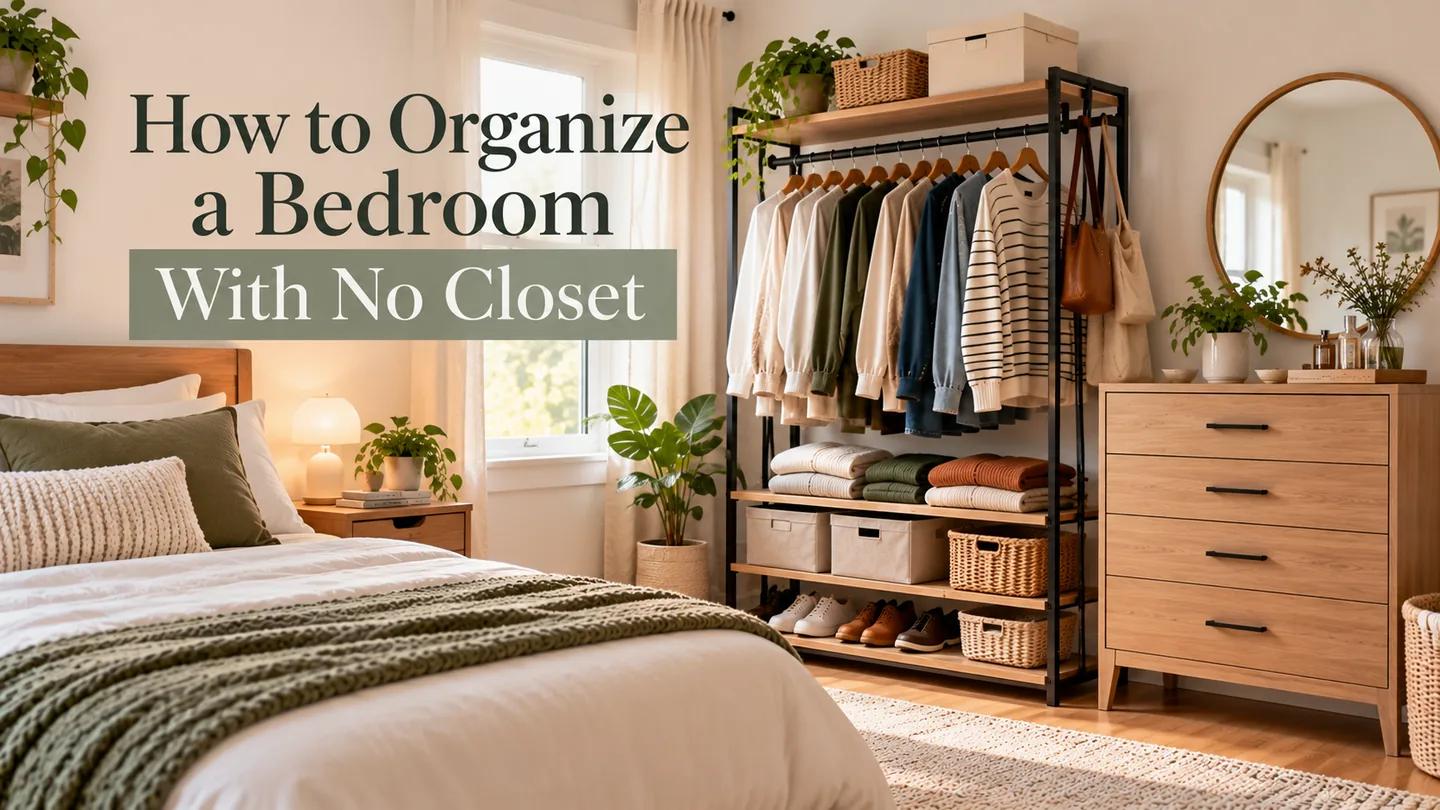
How to Organize a Bedroom With No Closet
A bedroom without a closet can work surprisingly well, but only if your clothes have somewhere practical to go. Otherwise, a garment rack ends up in one corner, shoes collect near the bed, and sweaters take over whatever shelf happens to be empty.
The key to bedroom organization with no closet is to create a clothing storage system that fits your wardrobe without taking over the room.
You don’t need to recreate a full walk-in closet. You need enough space for hanging clothes, folded items, shoes, accessories, and laundry, with everyday essentials kept within easy reach.
Here’s how to make that work, even in a small bedroom.
1. Decide What Actually Needs to Stay in the Bedroom
Before buying a wardrobe, dresser, or clothing rack, look at how much the room really needs to hold.
Separate your belongings into four groups:
- Everyday clothing: Items you wear regularly and need within easy reach.
- Occasional clothing: Special-event outfits, seasonal jackets, and less frequently worn shoes.
- Belongings that could live elsewhere: Extra bedding, luggage, or off-season clothing that doesn’t need bedroom access.
- Things you no longer use: Clothing that no longer fits your needs and can be donated, sold, or recycled appropriately.
This step matters because a bedroom without a closet has to share its limited floor space between sleeping, moving around, and storing clothes.
For example, you might need quick access to work clothes and pajamas, but not to heavy winter coats throughout the summer.
If your home has a separate hall or utility closet, consider adding useful storage without built-ins there before introducing another bulky piece of furniture into the bedroom.
The goal isn’t to remove everything. It’s to reserve the most convenient bedroom storage for the things you actually use.
2. Measure the Room Before Choosing Storage Furniture
A wardrobe can fit against a wall and still make the bedroom uncomfortable.
Before buying anything, measure the available wall space and the clearance around nearby furniture.
Pay particular attention to:
- The walking route between the door and bed.
- Space needed to open dresser drawers or wardrobe doors.
- Clearance around windows, outlets, and heating equipment.
- The available depth beside or at the foot of the bed.
- Space beneath the bed, including center supports and frame legs.
Use painter’s tape to mark the footprint of a potential wardrobe or dresser on the floor.
This gives you a better sense of how the furniture will affect movement than dimensions alone.
When planning small bedroom clothes storage, choose furniture based on usable capacity, not simply how many clothes it can theoretically hold. A slightly narrower dresser with drawers you can open fully may be more useful than a larger unit squeezed against the bed.
3. Plan Storage Around the Clothes You Own
Effective clothes storage without a closet starts with matching storage types to clothing categories.
Rather than buying a hanging rack and trying to make everything fit, work out what actually needs to hang and what can be folded.
Clothes that need hanging space
Dresses, jackets, button-down shirts, and wrinkle-prone garments usually benefit from a rail or wardrobe.
Estimate how much hanging width you need for the clothes you regularly wear, leaving enough room to separate and remove individual pieces.
Clothes that can be folded
Jeans, T-shirts, sweaters, pajamas, underwear, and workout clothes can usually go into drawers, fabric bins, or shelves.
If most of your wardrobe falls into this category, you may need more drawer space than hanging space.
Accessories and smaller items
Belts, scarves, jewelry, bags, and hats need defined locations, but not necessarily individual organizers.
A few hooks, one drawer section, or a small tray may be enough.
Once you understand these proportions, you can choose furniture that reflects your actual wardrobe instead of trying to reproduce a conventional closet.
4. Create One Main Clothing Storage Zone
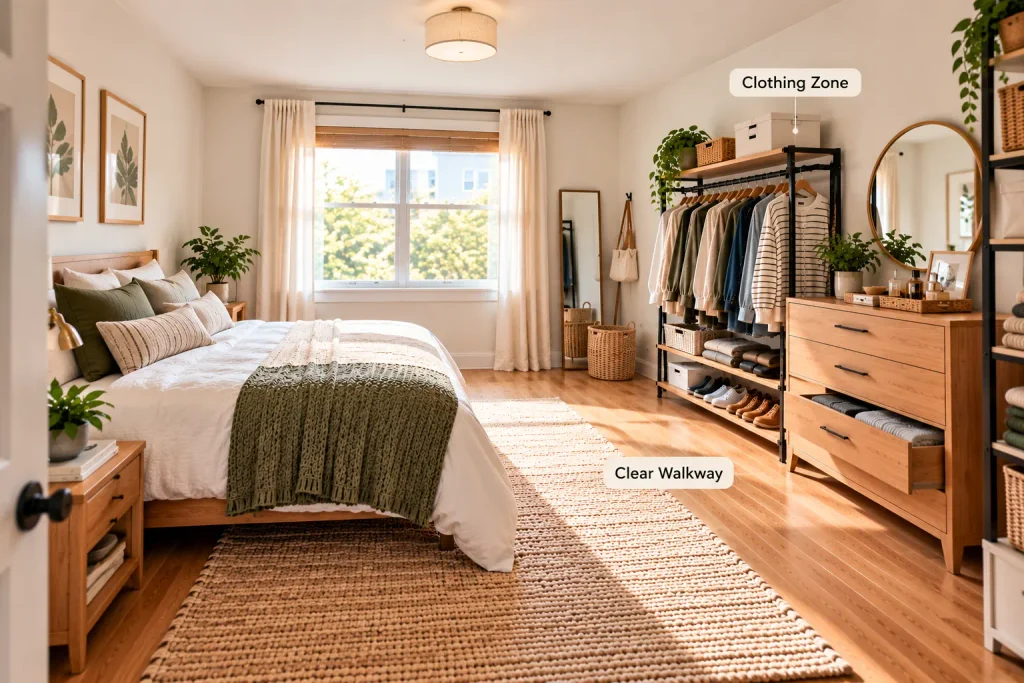
One of the most effective no closet bedroom ideas is to concentrate everyday clothing storage along one wall or in one clearly defined area.
When a garment rack sits beside the window, a dresser occupies the opposite wall, and shoes spread around the door, the room can feel like several separate storage areas.
A more cohesive arrangement might be:
- A compact wardrobe beside a narrow dresser.
- A freestanding garment rack with a drawer unit underneath.
- A dresser with a short hanging rail nearby.
A practical layout example: a dresser and garment rack share one wall while the opposite side of the bedroom remains relatively open for the bed and walking space.
Keep the clothing zone away from door swings and primary walking routes.
Grouping storage doesn’t mean forcing everything into a single furniture piece. It means giving the room a clear boundary between clothing storage and the area used for sleeping.
5. Choose the Right Wardrobe Alternative
There are several wardrobe alternatives for small spaces, but they solve different problems.
Choose based on your hanging needs, available floor area, and how much clothing you want visible.
Freestanding wardrobe: best for hiding visual clutter
A compact wardrobe or armoire can provide hanging space, shelves, and sometimes drawers within one piece of furniture.
This works especially well when you prefer closed storage or have a mixture of hanging and folded clothes.
Look for a wardrobe that provides the storage functions you need without being unnecessarily deep.
An oversized unit may hold more clothes but leave too little space around the bed.
Safety note: Secure appropriate furniture to the wall according to the manufacturer’s instructions. The U.S. Consumer Product Safety Commission’s Anchor It! campaign emphasizes anchoring furniture with drawers, doors, and shelves to help prevent tip-over injuries, particularly to children. anchorit.gov
Garment rack: best for a small active wardrobe
An open garment rack can work well in a rental or a room that needs only modest hanging space.
Choose a sturdy model with enough capacity for your regular clothes rather than every garment you own.
Leave breathing room between pieces so removing one shirt doesn’t pull several others off their hangers.
A rack with a lower shelf can also hold a few everyday shoes or appropriately sized storage bins.
The tradeoff is visibility. If a crowded rack makes the bedroom feel busy, a closed wardrobe may be worth the extra footprint.
Wall-mounted rail: best when floor space is extremely limited
A wall-mounted clothes rail can keep the floor open, but it requires suitable wall construction and hardware.
Check the weight rating, installation requirements, and rental restrictions before choosing this option.
Do not assume adhesive hooks or removable strips can safely replace a properly installed structural rail.
For many renters, a compact freestanding rack is the simpler choice.
6. Give Folded Clothes a Practical Home
Folded clothing can easily become the largest storage challenge in a bedroom without a closet.
A narrow dresser is often useful because it separates categories while keeping piles hidden.
Arrange drawers around your daily routine, for example:
- Top drawer: underwear and socks.
- Second drawer: T-shirts and everyday tops.
- Third drawer: sleepwear and workout clothes.
- Bottom drawer: jeans and other bottoms.
You don’t need a divider for every type of clothing. Use them only where items otherwise get mixed together.
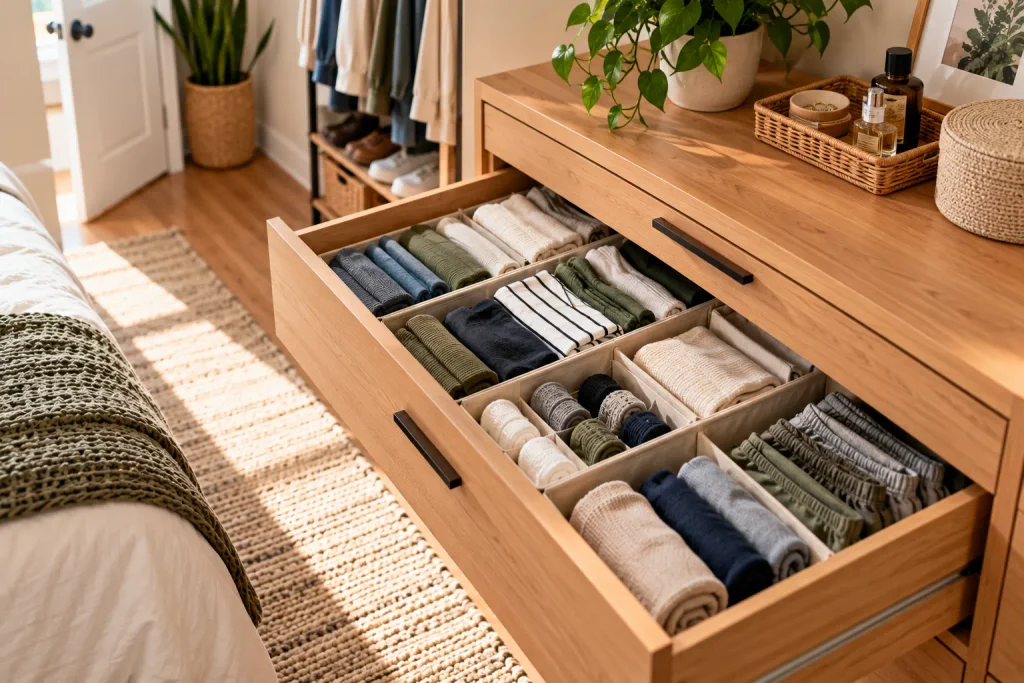
If a dresser won’t fit, consider a wardrobe with internal drawers, compact drawer modules, or sturdy shelving with a limited number of containers.
For rooms with almost no drawer space, clothes storage solutions that don’t require a dresser may offer more practical alternatives than squeezing in another piece of furniture.
Avoid choosing open shelves solely because they look good in photos. If you know you won’t maintain perfectly folded stacks, drawers or bins may be easier to live with.
7. Use Under-Bed Storage for Seasonal Clothes and Bedding
Under-bed space is valuable, but it works best for items you don’t need every day.
Good candidates include:
- Off-season clothing.
- Spare bedding.
- Less frequently worn shoes.
- Occasional accessories.
Before buying containers, measure the actual clearance beneath the bed. Include the frame’s center supports and check that the container can slide out into the available floor space.
Choose shallow, appropriately sized bins or bags that protect clean clothing from dust. Avoid overpacking them, especially if doing so makes retrieval difficult.
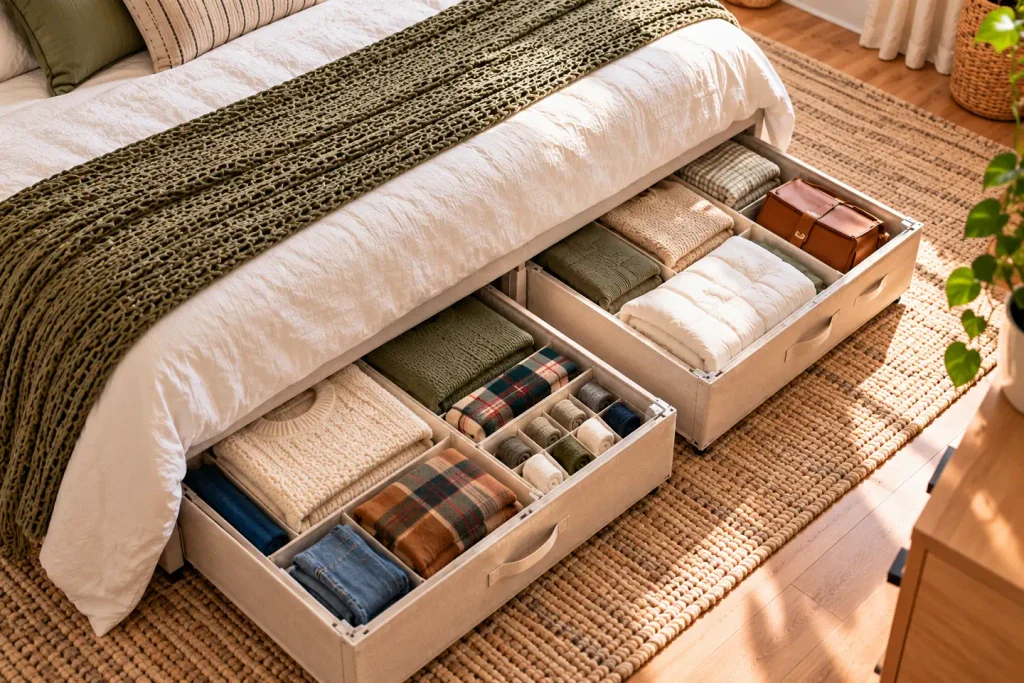
Keep categories simple and identifiable. One container for off-season sweaters is easier to manage than several mixed boxes.
If spare bedding is consuming all the under-bed space, and your home has a separate linen cupboard, a better way to organize deep linen closet shelves could free that area for clothing instead.
The goal is secondary storage, not a hidden collection of things you’ve forgotten about.
8. Give Shoes, Bags, and Accessories Defined Spots
Even when clothing is neatly stored, a few loose categories can make the whole bedroom feel unfinished.
Start with shoes. Keep frequently worn pairs in one accessible spot, such as:
- A low shelf beneath a garment rack.
- A compact shoe rack.
- The bottom of a wardrobe.
Store occasional pairs elsewhere if they don’t need immediate access.
For especially tight layouts, shoe storage ideas that work in small bedrooms can help you choose an arrangement without blocking the walkway.
Everyday bags can occupy one shelf or a couple of sturdy hooks. Jewelry, belts, and smaller accessories usually need only one drawer section or tray.
Avoid buying a specialized organizer for every category. Begin with what you already own and add containment only where items repeatedly become messy.
9. Use Vertical Space Without Crowding Every Wall
Wall storage can help when floor space is limited, but it should have a specific purpose.
Consider a short row of hooks for bags, a shelf above the dresser for lightweight items, or a carefully planned storage area above a wardrobe.
Keep frequently used belongings within comfortable reach. Reserve higher storage for lighter, less frequently used things and follow the load limits and installation instructions for shelves and hardware.
Avoid surrounding the bedroom with shelving just because the walls are available.
Blank wall space helps a small room feel less crowded, particularly when clothing is already visible on an open rack.
10. Plan for Laundry and Clothes You’ll Wear Again
A closet-free clothing system isn’t complete until it accounts for what happens at the end of the day.
Dirty laundry needs a hamper near where you normally change clothes. Choose one that fits the room and your washing routine rather than the largest basket available.
Clothes that have been worn but aren’t ready to wash need a separate, limited spot.
This could be:
- One or two sturdy hooks.
- A designated section of the garment rack.
- A small basket for suitable items.
Keep this temporary zone intentionally small.
Otherwise, it becomes the familiar chair piled with clothes, even when the rest of the bedroom is organized.
Three Simple Bedroom Storage Setups to Try
You don’t need every storage solution mentioned above. Choose the combination that fits your wardrobe.
| Your wardrobe | Practical setup |
|---|---|
| Mostly folded clothes | Narrow dresser + short hanging rail + under-bed seasonal storage |
| Mostly hanging clothes | Compact wardrobe or garment rack + small drawer unit + one shoe zone |
| A mix of both | Wardrobe with hanging space and shelves + internal drawers + secondary under-bed bins |
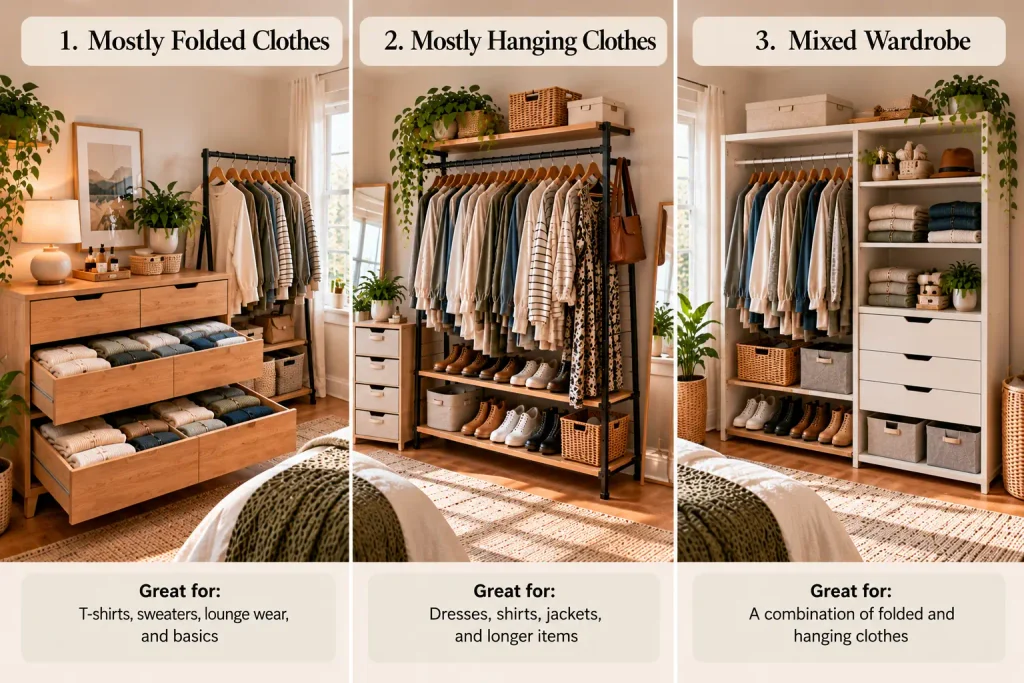
These arrangements are starting points, not fixed furniture shopping lists. Adjust them to the actual dimensions and layout of your bedroom.
Common Mistakes to Avoid
Even a thoughtfully organized bedroom can become cramped if the storage system is difficult to use.
Buying everything before measuring. A dresser, rack, and shoe unit might each fit individually, but not leave enough room to open, access, or walk around them.
Choosing capacity over convenience. Storage that requires moving several items to reach one everyday shirt will be frustrating, regardless of how much it holds.
Overloading open storage. A garment rack packed tightly with clothes and accessories becomes difficult to maintain and can make the bedroom feel cluttered.
Ignoring the daily routine. Without places for laundry and recently worn clothes, surfaces will quickly become storage again.
The simplest test is whether you can get dressed and put things away without moving furniture, shifting piles, or searching through several containers.
Keep the System Easy to Maintain
Once everything has a home, you shouldn’t need a complicated organizing routine.
At the end of the day, return clean clothes to their storage zone, put dirty laundry in the hamper, and deal with anything left in the temporary-wear area.
Every season, review the clothes occupying your most accessible storage. Move out-of-season items to secondary storage and reassess garments you haven’t been wearing.
If the system regularly overflows, look at which category needs adjusting before buying more organizers.
A workable bedroom setup should make everyday habits easier, not demand constant rearranging.
Final Thoughts
A bedroom without a closet doesn’t need storage in every available corner.
It needs an arrangement that reflects the clothes you own and the space you have.
Keep everyday clothing in one main zone, choose furniture that leaves room to move, and use less accessible areas for seasonal belongings.
When hanging clothes, folded items, shoes, and laundry all have practical places to go, the missing closet becomes much less of a problem.